Intuit’s four financial software brands — TurboTax, Credit Karma, QuickBooks and Mailchimp — are known to the small business community and consumers alike. But they are perceived singularly, as DIY solutions, rather than four brands housed under a single umbrella.
Intuit is attempting to change that perception by positioning the company as an end-to-end platform rather than a collection of disparate products and services. The goal is to move from “a house of brands to a branded house,” according to Intuit CMO Thomas Ranese. “We want to shift the category from DIY software to done-for-you experiences,” he said. “We’ve been the leader in DIY software, and now we want to define this next chapter and category.”
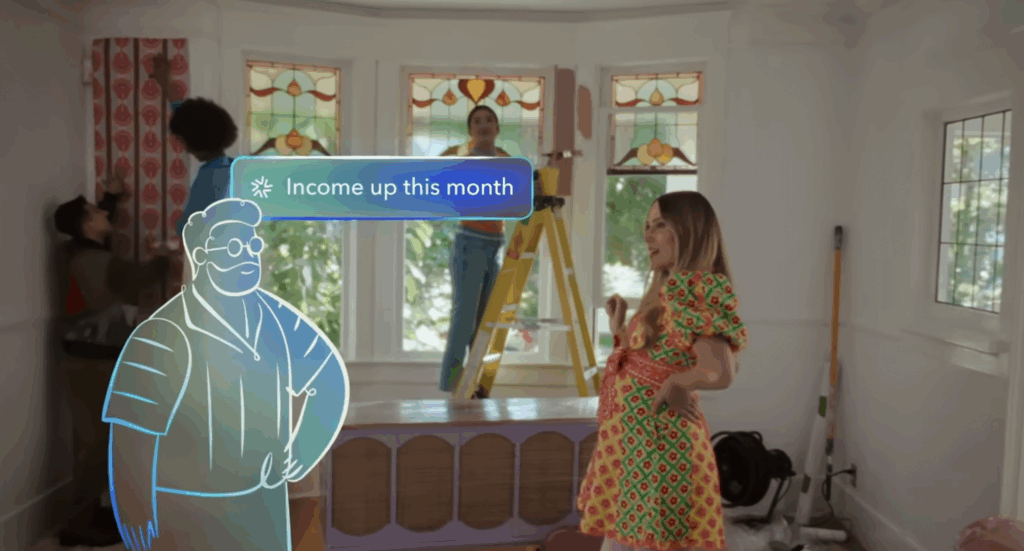
The latest AI features embedded within Intuit’s products are key to that narrative. Most notably, users of its QuickBooks software for small businesses can now empower AI agents to automate workflows related to customers’ accounting needs. Intuit launched a brand campaign highlighting these features late last year, dubbed “Outdo It with Intuit QuickBooks,” which depicts a suite of friendly, animated AI agents assisting business owners with various financial tasks. The ads, which are airing across linear TV, OTT and social platforms until April, attempt to humanize the AI helpers while also touting the brands’ actual human workforce that’s ready to assist when needed.
We sat down with Intuit CMO Thomas Ranese to discuss the company’s strategy for growth, its new platform positioning, the QuickBooks ad campaign and his approach to leveraging AI within the marketing organization. And for part two of our chat with Ranese, he covers competitive differentiation in the marketplace, appealing to younger consumers, marketing lessons from previous roles and his advice for aspiring CMOs.
Chief Marketer: You’ve just finished your first year at Intuit. Now that you’re firmly entrenched, tell us about the brand’s top areas for growth.
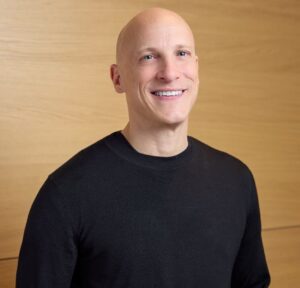
Thomas Ranese, CMO at Intuit: The reason why I joined the company is because we’re going through this incredible platform transformation, a journey we’ve been on for probably the last decade. As I round out my year and think about 2026, there’s three top priorities that we have from a marketing and brand perspective to help drive the business. The first is establishing Intuit as a definitive AI-driven expert platform that drives customers’ financial success — a journey we’ve been on, but showing the power of how Intuit and what we call our cornerstone brands, which are TurboTax, Credit Karma, QuickBooks and MailChimp, work better together in achieving that mission.
The second is that we have to evolve from being a house of brands to a branded house, and showing how Intuit really drives the business and where the products then unlock the day-to-day benefits. So, reinforcing the innovation that Intuit brings with AI and HI [Human Intelligence].
And then the third, as I think most CMOs are talking about now, is how do we transform the way we market as well as the way we go to market with AI. And that means reimagining the way we work internally — creating new mindsets for how we adopt AI and reimagine our workflows, but also then how we go to market and showcase the benefits of AI to our customers.
CM: What are some challenges to marketing the overarching Intuit brand, when people are likely more familiar with those four products?
TR: To me, the opportunity is to help people see that Intuit is driving the innovation of our platform. As you’re using these individual cornerstone brands or products, when you see the powers of AI and HI — and by that I mean our AI agents and all the innovation that comes with that technology, but by HI, I mean our human experts and our network of professionals who are there to also provide expertise and confidence — [you can see] how those things are fueling the platform behind the products that you’re using day to day. So [it’s about] helping that AI+HI benefit become more transparent, more visible, to our customers.
It’s also building the brand externally. And that’s a journey we’ve been on for many years. We launched the Intuit Dome about a year or two ago, which helped put Intuit on the map as a wholesale brand. We just announced our sponsorship with LA28 in the Olympics. We’re doing a lot to also make sure that Intuit is showing up on the global stage and in culture in a way that makes the Intuit brand relevant. But I think the most important thing is showing customers how they experience the innovation in our products.
CM: Intuit has teamed up with OpenAI to make its apps available in ChatGPT. What are your goals from the partnership?
TR: It’s a groundbreaking partnership from my standpoint. This would be the first time that customers and businesses can unlock the power of our platform and take action with their apps from ChatGPT. We want to meet our customers where they are, and as you know, they’re turning to these LLMs more regularly, on a daily basis. We want to make sure that we can provide them with the expertise and the functionality that the Intuit platform uniquely delivers where they are today, which is married with the incredible models and power of OpenAI’s LLMs and ChatGPT. It also opens doors to bringing in millions of more customers and giving them access to our products who may not experience them today. So it has an opportunity to help us grow our business as well.
CM: How are you marketing the AI capabilities of your platform itself? What’s your strategy for showing up and getting new customers?
TR: The best form of marketing AI to me is show, not tell. Because I think there’s a lot of AI washing across many industries right now. We’re living in the era of AI, so how do we make sure that we’re showing people the benefits? Which for us is ultimately saving them time, giving them confidence, but putting more money in their pocket. Our new campaign with QuickBooks in many ways helps demonstrate the benefit of our AI agents and the expertise of our human network by humanizing the technology and bringing that to life as a team that’s at our businesses’ side, to help them make better decisions every day. [It’s] showing them that benefit and then ultimately [with] the campaign, helping them see the ways that that benefit comes to life, saving them time, getting them paid faster, helping them pay their employees, in ways that are really tangible.
CM: What’s the customer insight behind the QuickBooks campaign?
TR: We’re calling it the “Outdo” campaign. It started with this simple insight, but one that we heard time and time again from customers of all sizes. Running a small business can feel incredibly lonely. And overwhelming. And folks feel like they just don’t have enough time in their day. They wish they can scale themselves, and I think we all feel that, but small businesses feel that acutely. We want to help them see that with Intuit at their side and a team of AI agents and human experts, doing it yourself never means doing it alone.
It’s an opportunity to both reposition ourselves, as a platform — going from point solutions of bookkeeping and email management to being an end-to-end platform to running and growing your business. We want to shift the category from DIY software to done-for-you experiences — that this idea of having a team of AI agents and human experts means you now have the power of getting things done for you. So it’s in many ways software-powered services and solutions. We’ve been the leader in DIY software, and now we want to define this next chapter and category.
CM: How is this campaign different from a creative perspective?
TR: From a creative standpoint, it’s how do we humanize the technology? We’ve got ways to make AI — which often feels invisible — feel visible by illustrating the idea of agents as a team that are at your side and your beck and call to get these things done for you so that you can focus on your business. But then you have access to a network of 13,000 human experts who are there to answer questions, provide expertise that’s unique to you, or just help you feel confident in the decisions that you need to make.
We have a cast of agents that you’ll see in the spots, which are all uniquely depicted based on the functionality they provide from payments to payroll to customer acquisition. They all have unique personalities that depict those functionalities. It’s meant to illustrate the interaction you would have with them on our platform. You could ask them to do things for you, but they’re also actively working on your behalf, getting things done for you, and then asking if you want those tasks completed. And that’s the kind of interaction that we have in our products. We’re trying to humanize in the campaign, and then to be able to turn to a human expert, whether on your phone or on your computer, by voice, when you need someone human to close the loop.
And the idea of “outdo” … We want to help crush our customers’ financial goals. And we want to help them outdo the financial uncertainties they feel, outdo the time constraints that they have in their day, and outdo the competition — and achieving the goals that they have. Small businesses are resilient individuals, who are out there really trying to thrive. We wanted to capture that spirit and be in there with them to win.
CM: Shifting gears to how your marketing teams use AI internally … Leaders have different ways of motivating people in their organizations and provide various tools for their marketing teams to use. I would love to hear Intuit’s perspective on that.
TR: When it comes to how we think about AI for our teams and for our marketing, there are two things we’re trying to do: transform mindsets, because this is, in some ways, as much about culture change as it is about operationalizing the technology and the tools, but then also reimagining how we work and so on. The first is we really want our teams to adopt AI as a daily habit. And we’ve done a ton of work on that over the last year. The good news is 87% of our team are using gen AI daily. And we have 700 custom AI assistants that we’ve created using these platforms. People are figuring out ways to make AI part of the way they do their job.
But then second and equally important is reinventing our workflows and how we get work done. It’s not just about incremental improvements, but about reimagining end-to-end processes, because that’s where we’ll get scale benefits and ultimately start to transform the way the marketing team functions. And we’re working on both fronts. On the second, we’re doing a ton of work now to scale a lot of our early experiments and pilots into true transformation. We’ve gotten past the experimentation phase into true end-to-end workflow design.
A good example is that is we launched something called the Marketing Studio this year, which is an agentic platform that creates campaigns that run in our products end to end. We’ve been able to go from what was really three or four weeks of work down to an hour, and sometimes as little as 20 minutes, using agents who can do all the work, from designing the brief to designing the strategy, coming up with the creative assets, and then running them on our platforms. That’s the beginning, I think, to what we’re starting to see.
CM: As for the humans, how have their jobs evolved? What do they do now at Intuit?
TR: There’s still a lot of work to be done, and the good news is it allows the teams to now focus on higher value activity. It’s AI for the ‘what’ and humans for the ‘so what.’ Because what’s great about this technology is it can automate; it can make things more efficient in terms of routinizing the processes to which we make work. But what you still need to do is feed it human insight and intuition in order for the work to then actually meet true customer needs.
It’s the creativity, the insight, the curiosity that the marketers bring to the technology that are going to make the tools create the right and better results. I think it’s [about the] brands that marry that combination — the “AI-HI” that we’re promising in our platform. If we bring that to life in our marketing and the way we think about how we go to market, I think those are the brands that are going to stand out. It’s bringing that authenticity still to the way that we’re showing up, even though we’re using this technology to get us to do it quicker, better, faster.
Editor’s Note: Enjoy part 2 of our conversation with Thomas Reese, which covers category challenges, marketing to younger business owners, leadership lessons and advice for aspiring CMOs.