Pearson is trying to outrun its past.
For many people, the education brand reminds them of a logo on the back of a high school chemistry textbook. But the company sees itself as a lifelong learning partner spanning schools, universities, vocational training and the workplace. And Pearson wants to shift the audience’s perception.
Pearson’s first global brand campaign in five years is designed to illustrate all of its products and services, from K–12 and higher education courses to IT certification prep and cybersecurity workforce training programs, and it relies on AI to do it.
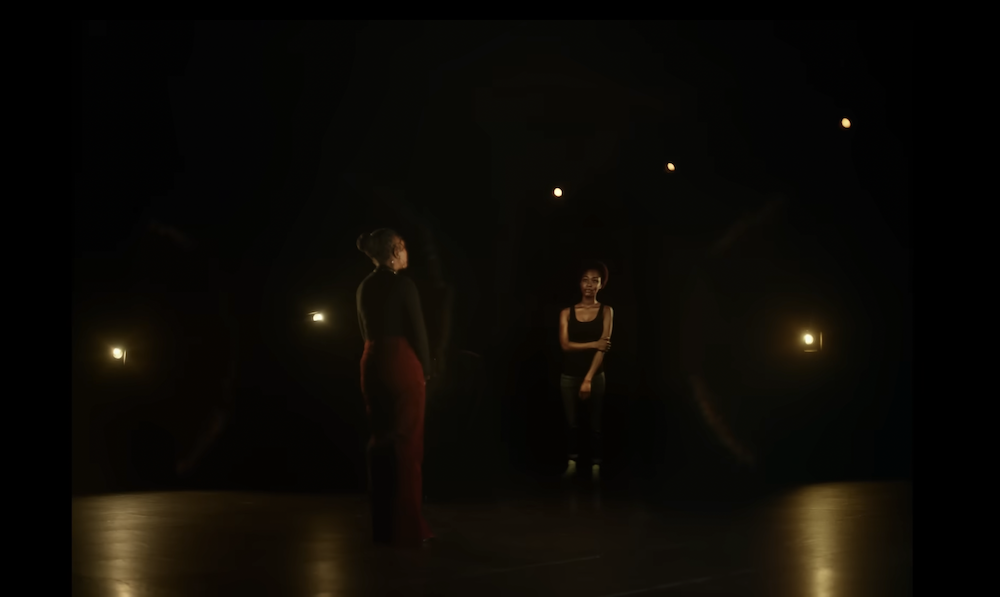
For the campaign, Pearson found participants who agreed to revisit pivotal moments in their lives. The twist is they revisit these moments by meeting AI-generated versions of their younger selves on a theater stage.
For marketers wrestling with how to deploy AI for creative assets, this campaign takes an out-of-the-box approach. It also begs the question: Can a legacy brand use AI to credibly rewrite what it stands for?
“AI is not speaking for our learners in these films; it just helps them hear themselves more clearly,” said Ginny Cartwright Ziegler, Pearson’s CMO.
The campaign officially launched on March 3, with Pearson releasing videos over the coming months.
Making the Learner the Protagonist
Pearson started the campaign by looking for people whose lives had been materially changed by education, credentialing and skills training.
Instead of scripting these stories, the team started with a simple yet vulnerable exercise of asking each person to write a letter to their younger self. Those letters became the emotional foundation and set clear boundaries around what each person was willing to share, Ziegler said. They also became the creative spine for the AI component.
Pearson chose stories that pulled at the viewer’s heartstrings. The videos highlighted how education often holds an emotional connection for the learner and is not strictly a procedural process of finishing assignments to receive passing grades.
For example, one of the participants, Jasmine, was a mother who left an abusive relationship and rebuilt her life by becoming a nursing assistant through Pearson-accredited programs. Another is a student who turned to Pearson’s Connections Academy online school after her father died from a brain bleed, her mother battled cancer and bullying made traditional school impossible. A third is an adult who lied about finishing high school for years, but later earned a GED, trained in culinary arts and eventually built a business.
The videos are intentionally emotional. These videos represent a visual manifestation of an internal conversation that already exists in the learner’s own words, Ziegler added.
Taking the Campaign to Market
Once the creative was locked, Pearson had to answer a different question: How do you get a campaign like this in front of the right people and learn, in real time, what actually resonates?
The distribution plan blends paid, owned and earned channels, with social as the lead paid environment. Working with VaynerMedia, Pearson is taking a test-and-boost approach. They will release a wide variety of cuts and formats into social feeds and watch which pieces gain organic traction. Afterward, Pearson can shift more budget behind the pieces that demonstrate real engagement.
All of the videos drive back to a central campaign hub where viewers can watch the full films and explore the learning pathways behind them, such as the nursing program in Jasmine’s case. These video views give Pearson a clearer picture of who is leaning in and signing up for courses and certification programs.
There is also a physical extension open to the public in Pearson’s London labs, where a wall-sized screen lets visitors walk up and see a younger version of themselves. The activation turns the campaign’s core idea into a live experience.
Building Ethical Guardrails Around AI Likeness
While the creative benefits of using AI to recreate someone’s younger self are obvious, Pearson understood that the risks are just as real. Likeness, consent and the potential for fabrication were central concerns from the start.
There are a plethora of pop culture examples to pull from to give any brand pause before using AI to create someone else’s likeness. For instance, when Scarlett Johansson called out OpenAI, whose chatbot “Sky” sounded eerily similar to her. Or the anonymous creator who used AI to clone the voices of Drake and The Weeknd to create the song “Heart on Your Sleeves.”
These ethical concerns are a major reason Pearson consulted the campaign participants throughout the learning process.
The participants were brought into the process early to decide what they wanted to share and how it would be presented. That collaboration continued through postproduction. Pearson stayed close to each participant, sharing cuts and making adjustments to ensure they were comfortable with how their story and image appeared in the final films.
“We’re not interested in manufacturing experiences or replacing human voices,” Ziegler said. “These are their journeys, and they lead the story.”
For marketers, the approach underlines a simple rule: If AI is going to touch something as personal as identity, it needs clearly defined guardrails and shared control with the people on-screen.