
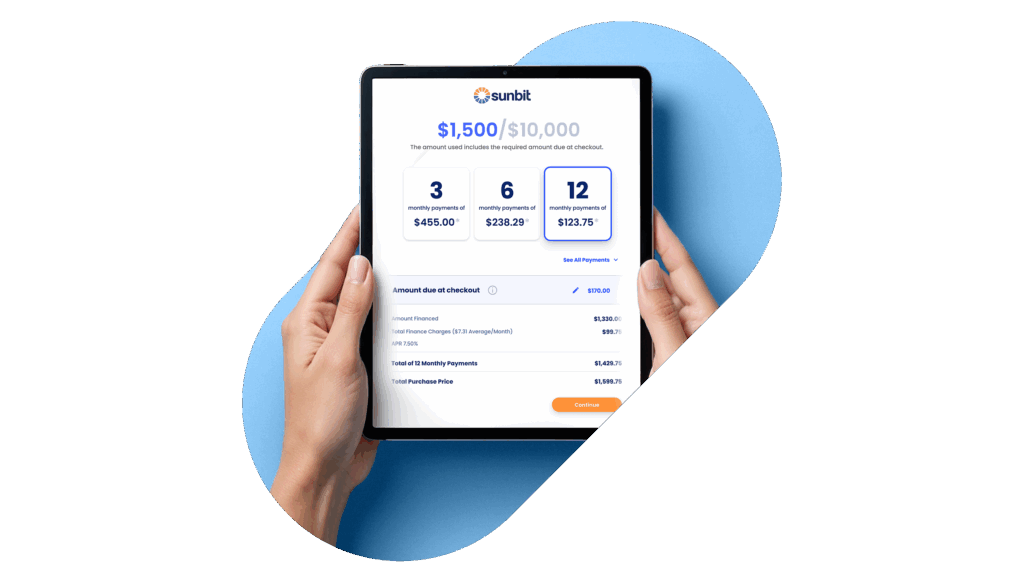
Buy Now Pay Later platform Sunbit, which partners with merchants to offer consumer loans for everyday expenses like auto repair and dental care, has hired marketing veteran Shachar Scott as its first CMO.
Having led marketing teams at Snap, Bumble and most recently Meta Reality Labs, Scott has joined the 10-year-old company to scale the business after a high-growth phase and build on its brand promise. We spoke to the marketing chief about her pivot to fintech, brand building at scale, the importance of establishing and nurturing trust, and why it’s critical for marketing leaders to remain in a perpetual state of learning.

Chief Marketer: You’ve led marketing teams at Bumble, Snap and most recently Meta Reality Labs. Why did you pivot to fintech?
Shachar Scott, CMO at Sunbit: I’d say two reasons. I love building. This is a “zero to one.” Sunbit has never had a CMO, so this is an opportunity to really build. It’s not a janitor marketing job — like, come in and clean up a mess. It’s come in and build this—product marketing, brand marketing, comms, literally every facet. And that’s super exciting. They have five million customers, and all that acquisition has been done at the point of sale with merchants. So it’s an opportunity for us to build a brand, and that’s what I love to do.
Number two, when you think about AI right now and the revolution that’s happening, there’s a ton that’s super interesting … There’s obviously a lot of utility with the rise of ChatGPT and Grok and all these other native platforms. The thing that is really going to help people and humans is happening in either healthcare or fintech — and Sunbit has both. We are providing solutions for people in a time of need, and it’s using an AI technology that is proprietary to Sunbit. So I wanted to merge my areas of expertise and also lean into what’s happening in the world right now—and do it for good.
CM: What’s most important when you’re building out a marketing team and a brand?
SS: There is a team in place, so I’m learning and meeting everybody who’s already here and also identifying where there are gaps. What building a brand looks like is its promise to the customers. That isn’t different. How you do that at every company does look different, because the complexity of Sunbit compared to other brands that I’ve worked at is unique. It’s not like I can take the playbook from an app that I’ve worked at or launching a piece of hardware and say, we’re just going to apply that here. So I am digging in and learning the complexity of this business, of this industry — and as I build a strategy and a vision of where we want to be in 2, 3, 5, 10 years, working our way backwards from that.
When I think of a brand, I think of it as a bank. Every customer interaction that a customer has with our company that is in the app, in the storefront, in our website with a merchant, with an associate, has to be perfect, has to be magical, has to be frictionless — and that should feel like a deposit in our brand bank. And every time that they do not have a great experience, there’s friction. Then that feels like a withdrawal.
Right now I’m trying to build out what that brand bank looks like and that promise we are going to be making to customers and keep it through every single customer touchpoint. A lot of our customers are actually repeat customers. They use our product in auto and then they also use it in dental. Or they also then take out a credit card. We are building long-term relationships with our customers, and building that brand promise and keeping it consistently is really important.
CM: Can you discuss the importance of marketing at this particular stage, after the brand’s “hyper-growth” phase? What role does marketing play?
SS: The company has been around for a decade, so there’s a lot that exists and then there’s a lot that doesn’t. What I’m doing right now in my onboarding discovery phase is a massive audit and deep understanding of what exists, what kind of quality is it at, what phase is it at, as you said. Is it going to be something that needs to be reset or calibrated? Is it good enough as it is? Then after I do that massive assessment, it is a deeper understanding of, is this a rebuild? Or is it a build because it doesn’t exist? Do we need to stand up a product marketing function because X, Y and Z?
CM: What lessons are you bringing from previous companies you’ve worked at?
SS: Three key things are core to me as a marketing leader. The first is storytelling. Great brands tell stories. They participate in culture because they are relevant and they tell compelling stories that people remember and connect with and either fall in love with or have a personal connection with. There are hidden gems of stories that already exist within Sunbit, and then there are many more stories to tell.
Number two, there is a very deep complex business within Sunbit. I’ve been doing my rounds and meeting a lot of the leaders and we’re joking that it’s almost like seven companies in one. And that complexity should never be felt by the customer. When you walk into marcom at Apple, the first thing you see on the wall is “simplify, simplify, simplify.” The first two are crossed out.
My job as a marketer is to simplify everything that we do, to eliminate that complexity and make sure that every customer is finding the right product for them, that they are understanding the complexity of what they are able to sign up for, and make it feel really seamless. And that comes down to the messaging, the words that we use. It also comes down to how we are positioning our products. It comes down to how we show up in market. Marketing has a role to play in terms of how we simplify everything that we do, and that ladders to the first point in terms of how we tell that story.
The third is, I love leading teams. I’ve led really, really big teams. I’ve led small teams. I’ve built teams. I love leading. A big part of also what excited me about Sunbit was the people. Throughout the process of getting to know them better, I fell in love with everyone that I met with and really connected with them on a deep level. And that was a huge draw for me.
CM: How does brand trust play a role within building a durable brand, specifically in financial services?
SS: Sunbit is unique in a couple of ways. One, we are meeting customers at a time of need. It’s not, ‘do I want the Gucci bag and I can’t afford it.’ It’s, ‘I need to change my tires.’ ‘I need to get an oil change.’ ‘I need to get my tooth extracted.’ So you’re instantly building trust because you’re helping somebody do something that they truly need. We are bringing them a solution that is allowing them access to a service that they wouldn’t be able to have if it wasn’t for Sunbit, or we’re just easing it and making it better for them to have that service done and eliminate that financial waste.
Trust is actually easier where there’s a little bit of a shortcut with the way that the product has originally been set up. Now it is up to Sunbit to keep that trust and maintain that through every single interaction. One of the ways Sunbit has always done that: it has always put the customer at the center of every single interaction. There are no fees. There’s never going to be a late fee. Even if you miss a payment and you’re late, they’re never going to charge you a late fee. And so that is a commitment that Sunbit has made to every customer. Yes, they are going to call you, they’re going to follow up in an email, and they’re going to work with each and every customer to make sure that they are working through that with that customer to meet their financial situation.
CM: And the challenges within this category?
SS: It is a saturated market. Obviously fintech is a massive category and fintech in general is trying to disrupt the financial services industry. There are a lot of solutions out there, depending on what you’re looking for. Sunbit has some category leadership in certain areas, specifically in auto. There are some competitors out there in other areas, but I think that Sunbit’s offering is differentiated and how we go to market for customers is special. And in that we are continuing to build that trust and maintain it. That will allow us to scale and grow and add other verticals, add more products, to maintain that trust with those customers and keep them. That’s the most important thing. We’re seeing 30% of customers repeat and have multiple products or multiple loans from us, which shows that they are happy with Sunbit and using it multiple times.
CM: Lastly, a question about the role of the CMO, or top marketing leader, itself: What, in your opinion, makes a successful CMO today? And any thoughts on how the role has been shifting in the past couple of years?
SS: The industry’s changing every hour, technology’s changing constantly, and you cannot stop learning. You can’t think that what you did yesterday is going to work tomorrow. So I’ve never stopped learning. Thankfully, I have teenagers that keep me up to date and on my toes. But I’m constantly consuming all the tech, all the content, all the things, all the platforms. I am using everything so that I know how consumers are going to engage with our brand, with our content, with our messaging, so that I am ahead or on pace with what is happening in the industry.
If you are not learning, if you’re not studying what is happening, then you are falling behind and you are going to get left behind — and you’re not going to be able to represent your company or your brand to your core customer in the right way. I think playbooks are a misnomer. I don’t think that you can take what worked last time and just apply it and say, we’re just going to optimize X, Y and Z.
Over the last few years? Authenticity really matters. It’s important to know what messages are important for the company to own and communicate, and what is sometimes better said by your core customer, by your ambassadors. There are other constituents that can represent you in the market that sometimes are more authentic coming from other people. And that word of mouth, that representation from the merchants, from the associates, from the dental hygienist, carries more weight.
I’m looking at Facebook groups and seeing what they’re saying about us that’s more valuable than me taking out a Facebook ad potentially from us. That is an advertisement; that is them carrying our message for us. It doesn’t mean that we’re not going to do Facebook ads, but it does mean that there are different ways for your brand to carry a message depending on who you’re trying to reach and how. It’s important to understand deeply who should carry which message. It doesn’t always have to be a paid message by the company.
This interview has been edited and condensed.