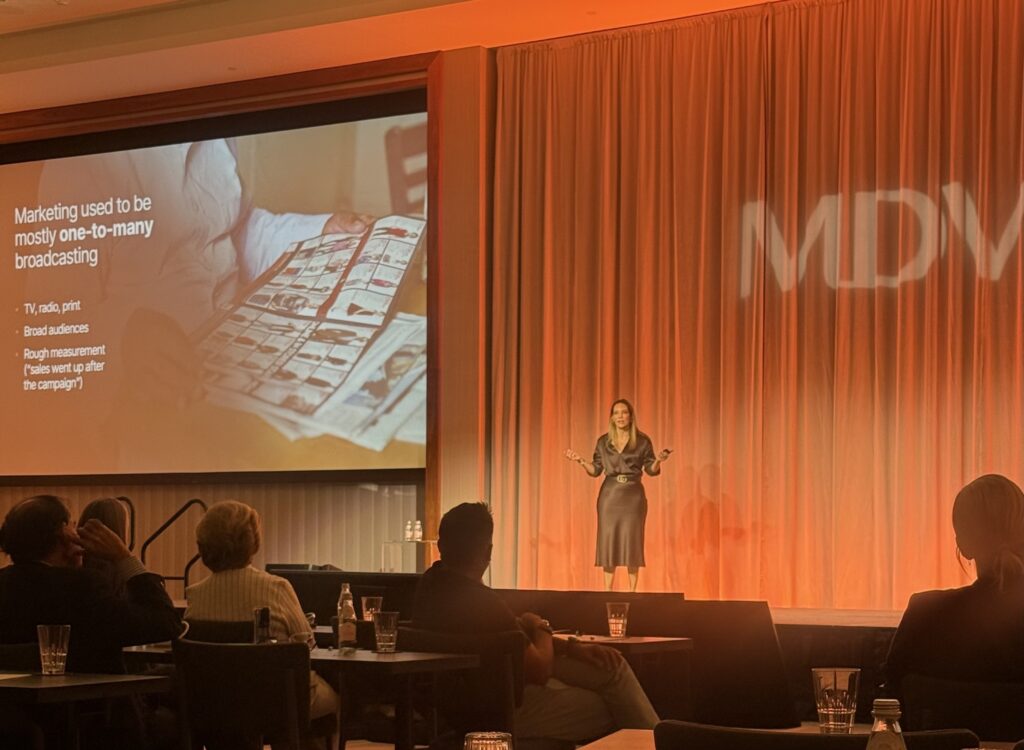
Most marketers today are tasked with reaching multiple audiences as they seek new paths to growth. For healthcare marketers, however, those audiences can be especially different. They may need to build trust with patients making highly personal decisions while also speaking to physicians, employers or other stakeholders who influence those decisions. That requires marketers to balance distinct needs and expectations without losing sight of a consistent brand.
At MDVIP, those challenges are compounded. The membership-based healthcare company works with physicians considering a new practice model and helps prospective patients understand its value. For Chief Marketing Officer Alyssa Schaefer, that means balancing national brand strategy with highly localized marketing and embracing new technologies like AI without losing the human expertise behind them.
Chief Marketer spoke with Schaefer about marketing to physicians, building trust at the local level and why experience still matters in an AI-powered marketing environment.
Chief Marketer: Your role requires you to market to both physicians and consumers. How does that shape your approach as a CMO? 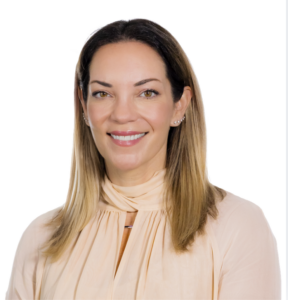
Alyssa Schaefer: My role as CMO is really to do just that — to find doctors that may be willing to practice and want to practice medicine in a different way, and to also find members. They could be existing patients of the doctors, or they could be new people in the community looking for a doctor.
My job is unique because I market both to doctors and to members. The members [side] is a direct-to-consumer model from a marketing standpoint, and on the doctor side, it’s more of a B2B marketing model because we have a sales team that engages directly with doctors. So it’s an interesting CMO role because we wear both hats.
As CMO, my job is to help grow the business, to paint the picture of our value and to drive our mission forward. My goal is to grow the business and ensure the member experience across all touchpoints — from digital to phone to billing — works together to deliver on our mission and our promise.
CM: You spent years marketing to physicians before joining MDVIP. What have you learned about earning their trust?
AS: One of the interesting things we did was have a member advisory board. We’d bring in about 15 to 20 doctors once a year to share our plans and strategies with them. In some cases, those meetings actually changed the course of our strategy.
I got really good at listening to doctors and understanding their feedback on strategy, product and what would be helpful. I also understood that they want to feel heard and valued because the work that they do every single day is valuable.
One thing I learned and have carried over here is that doctors really care about the community. On one aspect, they’re very competitive. They want to know where they stand in relation to their peers, but they also very much care about community.
We host in-person events four times a year, inviting existing doctors to tell prospective physicians what life is like before and after MDVIP. They sell what we do better than we ever could. That sense of community is priceless, and they love hearing from each other.
CM: How do you think about the customer journey, especially when healthcare decisions are so local?
AS: We do marketing on two levels. From a consumer standpoint, we do marketing at the very local level and at a more general national level.
The national marketing — SEO, SEM, PR and those things — helps because you want to make sure you’re found when people are looking for you. But on the local level is what’s unique about our marketing strategy because we try to hit all of those touchpoints of consideration.
We prepare our doctors for local PR. We’ve had success there by making sure they’re in the community talking about what they do. So PR, local events, social media, direct mail, email — all at the local level, trying to reach the existing patient base of that doctor or people in the community who are looking for a doctor.
Those marketing strategies will vary based on the community and the patients of those doctors. We adapt our marketing at the local level and have a broad marketing umbrella so you can find us online or a new doctor.
CM: AI has become part of nearly every marketer’s toolkit. How are you approaching it at MDVIP?
AS: I think all of us as marketers are still on the learning curve of how AI is going to change things.
From a data, insight and research standpoint, it gives us much quicker insights. It’s allowing us to synthesize campaigns and what’s working and what’s not working a lot faster. It’s allowing us to write content and be more specific about it faster. I’m excited about using it to allow us to test and learn faster.
One thing I tell my team all the time is that I fully believe AI is only as good as its operator. If you’re a good marketer, you’ll be able to use it to make your marketing even better. If you’re good at data and analytics, you’ll be able to use AI to make your insights crisper and more actionable.
We should be using it, but it doesn’t replace the expertise. It doesn’t replace years of experience. We have to question ourselves. We have to be skeptical of it.
CM: What’s the biggest piece of advice you’d offer marketers today?
AS: Fail and learn fast, or learn and fail fast. We’re not always going to nail it as marketers — in the messaging, in the campaign, in the channel or in the investment. Don’t throw good money after bad. Learn, succeed or fail, and move on. We’re going to have to do that over and over to get better.
Don’t be afraid to fail. Don’t be afraid to call out your failures. We can always learn something from them.
A lot of marketers tend to limit themselves to this channel, this campaign or this segment. We should not be limiting ourselves. We should be thinking about the full end-to-end customer journey — from the moment they think about you to the moment they consider you to the moment they buy, and then the entire experience afterward.
It is much cheaper to retain a customer than to acquire a new one. Think broadly about your remit and about how you can make a difference within the organization and within the customer experience, not just in your one small thing.