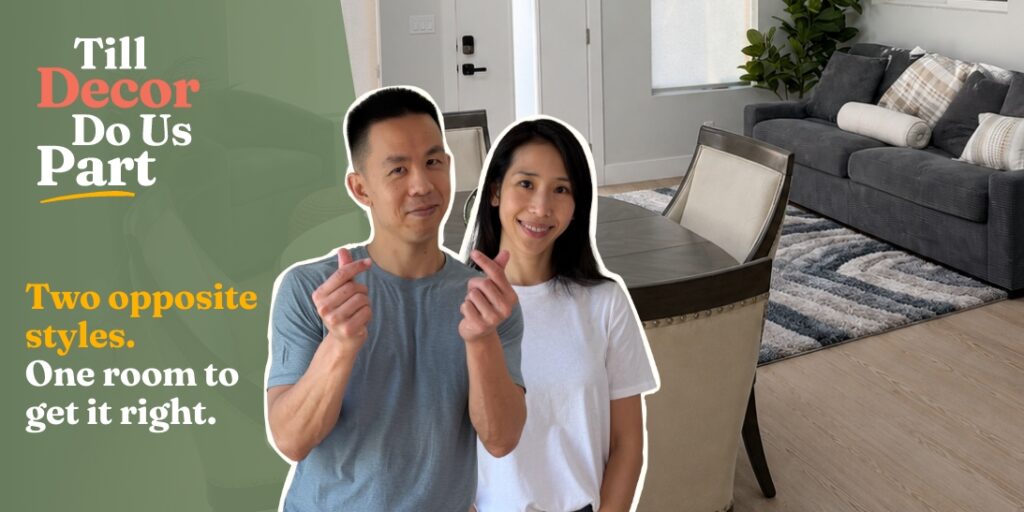
Bob’s Discount Furniture took a marketing risk when it invested in a nonbranded, entertainment-driven microdrama, said Chief Marketing Officer Steve Nesle. It was scary to launch the six-episode reality series, but the results quickly put its fears to bed, he said.
“I’m not being hyperbolic when I say that the results just made us incredibly excited,” he said. “We had a strong belief in our strategy, but I’m not afraid to admit that we were completely surprised by how well it performed.”
“Till Decor Do Us Part,” which debuted in July 2025, drove $9 million in attributed sales and accumulated more than 152 million video views and 223 million impressions. This is roughly 50% better than the retailer’s “business-as-usual” social media content, which is more overtly branded. It cost Bob’s slightly more to produce the microdrama than its normal content, but the better performance outweighed these costs, Nesle said.
That type of success made it an easy decision to do another season. Bob’s Discount Furniture began releasing Season 2 episodes Sept. 17, with one a week until Oct. 22.
New Season, New Strategy
While the brand was happy with the metrics last year, it tweaked its strategy this time around. Both times Bob’s used real couples, but in 2026 Bob’s used content creator couples instead of influencer couples. While there is overlap in these groups, Nesle defines influencers as people who share their opinions, whereas content creators are more focused on creating entertainment.
“We’re not stepping away from influencers,” Nesle said. “They’re still a big part of our marketing ecosystem, but now we have the addition of creators. So creators and influencers working together is magic.”
Every year, Bob’s carves out a portion of its marketing budget for innovation: tactics it has never used and can learn from. This is how it funded “Till Decor Do Us Part” in 2025, as microdramas were a new tactic. This year, it looked at what it wanted to learn so it could also fund this season through the innovation budget, he said. This is the first time Bob’s has used content creators on such a large scale, which qualified the program for the innovation budget, he said.
“We wanted to learn to what effect does partnering with a creator have on our brand, but more importantly, on organic reach, on free traffic,” he said. “These creators have pretty extensive networks, so they have great reach already. How can we leverage their reach to goose our organic reach?”
Bob’s Discount Furniture Gives Creative Control to Content Creators
The brand selected six pairs of creators who had “larger and mid-tier followings,” Nesle said, without quantifying the number. It was important that the creators’ values aligned with Bob’s so the content would feel organic, Nesle said. The brand looked for couples who were “clearly in love” and were wholesome, caring, relatable and approachable, he said.
The other big change from last season was that the creators were in charge of producing their own episodes. Unlike in Season 1, when Bob’s produced the content, this time the brand provided the creators with guidelines and explained how the show works, but the creators handled scripting, shooting and producing the show.
This made the production much faster for Bob’s, but the planning and casting took the same amount of time as last season.
After two episodes, the brand feels good about the trajectory of engagement, Nesle said. The goal for Season 2 is to meet or exceed last year’s metrics in terms of views and attributable revenue. However, Bob’s expects that the organic reach, or the free traffic, these episodes receive will exceed last year’s, as that was the reason Bob’s used creators — to tap into their robust networks, Nesle said.
Bob’s marketing innovation budget allows the brand to stay ahead of marketing trends. This is important as consumers continually shift to screens and away from TV, Nesle said.
“Increasingly advertising becomes a more challenging way to connect with audiences, so we’re constantly looking for new ways to connect and resonate,” he said. “Traditional advertising is certainly still a big part of our marketing ecosystem, but so too is creating content to meet people where they are, and increasingly they’re on their phones.”