Adults have been quietly borrowing Crayola for years. Now Crayola is finally speaking to them directly.
With the launch of Crayola All Grown Up, the brand is making its biggest push yet with marketing to adults, betting that creativity is as much a life skill for stressed-out professionals as it is for kids heading back to school.
“For 123 years we’ve been helping parents and educators raise creatively alive kids, and we wanted to talk to adults as adults,” said Ben Thomas, EVP of Marketing and CCO at Crayola.
The move pushes Crayola to answer a high-stakes question familiar to many heritage brands: How do you expand to a new audience without breaking the trust and identity that made you famous in the first place?
The answer, at least in this first phase, is rooted in research, experiential marketing and creator-led media strategy.
From Children’s Classic to ‘Lifelong Creativity Partner’
Crayola’s adult push began with examining the data.
The company undertook an extensive research program to understand who was actually buying and using its products. Across 23 studies and 23,000 adults, the team uncovered a pattern that a significant share of Crayola consumers weren’t parents shopping for kids.
“We did some really extensive research, and we found out at times over half of our consumers didn’t have kids, and they were using Crayola products for themselves,” Thomas said. The company also estimates there are around 24 million households in the U.S. where adults are coloring.
That insight reframed the opportunity. Crayola wasn’t just a children’s art supply company with some incidental adult users. It was sitting on a base of adult behavior it had never fully served or spoken to.
“We believe creativity is a life skill, and like any other skill, you have to nurture it and develop it, and that doesn’t stop when you’re an adult,” Thomas said.
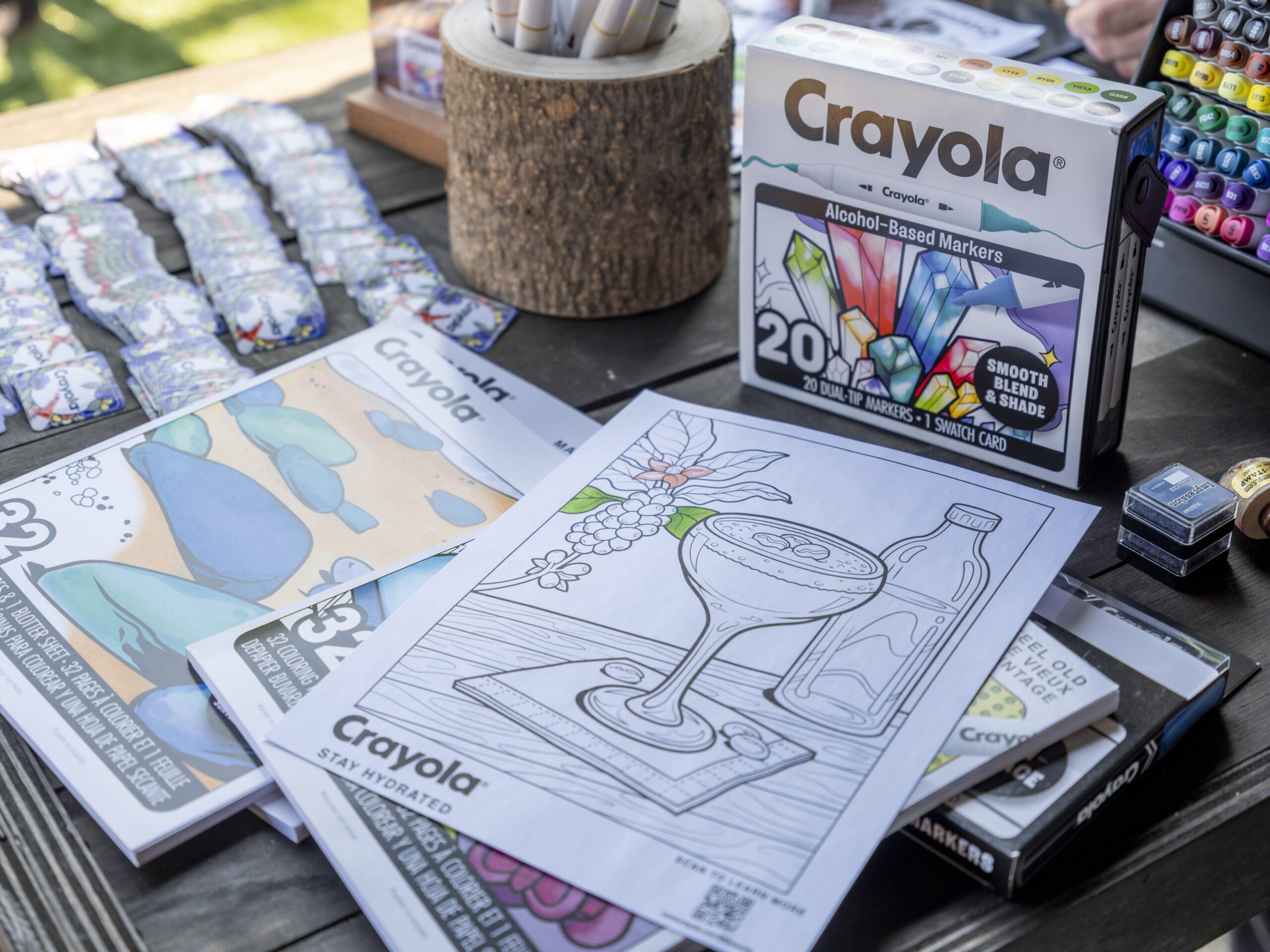
Crayola All Grown Up is the company’s answer to that thesis. Described internally as the brand’s largest-ever entry into the adult category, the line includes premium professional-grade alcohol markers, paint acrylic markers and coloring books designed for adults at different levels.
“One of the opportunities was how do we position Crayola as that lifelong creativity partner,” Thomas said. The communications, he added, had to be “really thoughtful, really considered,” connecting directly with adults in an authentic way rather than through the lens of parenting.
Product design reflects that balance. The adult line leans into Crayola’s color equity but renames and reframes it for adult sensibilities, with shades like espresso martini and arctic breeze, and themed books like Eye Candy, Stay Hydrated (cocktail hour) and Plant Lady.
Camp Crayola: Testing Adult-Only Experiential at Scale
Research set the strategy, but experiential marketing is bringing the adult brand to life.
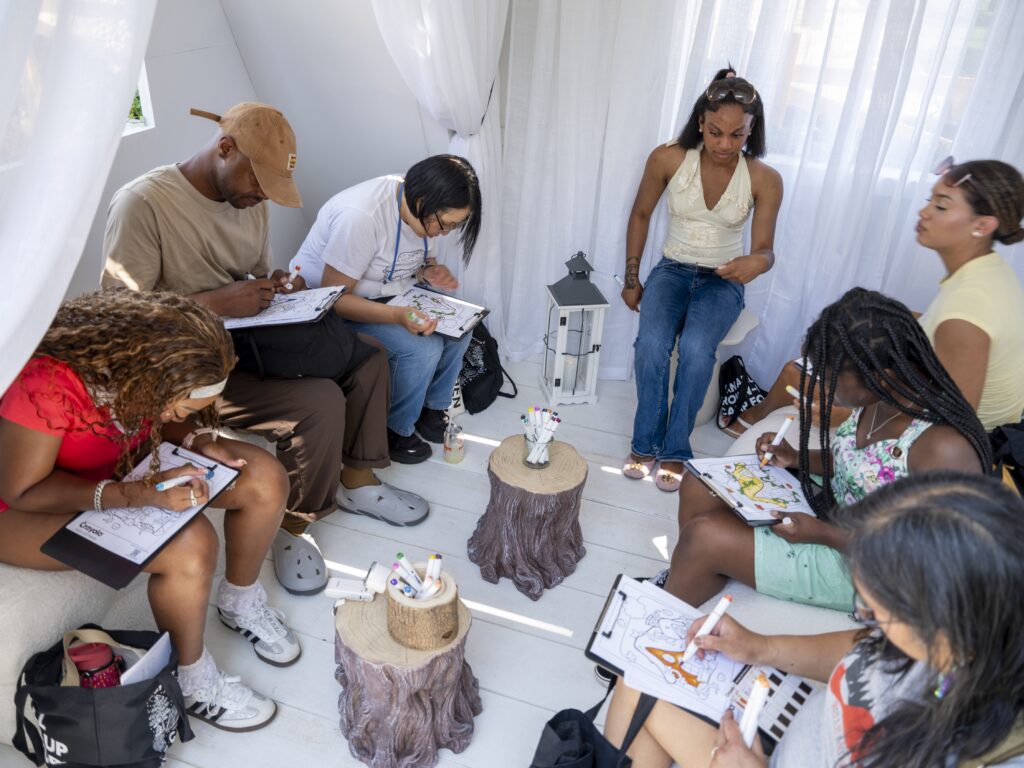
Crayola’s Camp Crayola activation in Brooklyn’s Domino Park became the first major public test of the All Grown Up proposition. Branded as the company’s biggest-ever adult event, it drew nearly 2,000 adults into an exclusive, kid-free environment designed around calm, play and creative rediscovery.
“We wanted to create an exclusive space somewhere that adults could really experience the products for themselves, and then we would let that experience do the talking,” Thomas said.
The team built a series of themed stations — cozy cabin, greenhouse, cyber shack — where attendees could try the new products in different moods and settings. In the cyber shack, Crayola introduced its first All Grown Up coloring app, bridging physical and digital coloring behaviors. A DJ played throwback tracks while guests colored throwback content, tapping both nostalgia and the current adult-coloring-as-wellness trend.
Local artist Lauren Beck, who helped develop content and products for the line, served as an on-site guide, offering tips on layering, blending, color chemistry, color selection and styling, Thomas noted. In practice, the event functioned as a live tutorial, product test and brand repositioning exercise in one.
One of the most telling observations from the team had nothing to do with markers or media plans. Thomas noted that at the adults-only event, almost no one was on their phone; instead, attendees focused on “a moment of calm and rediscovery and joy” with the new products.
The company is now evaluating a national expansion of the Camp Crayola concept and exploring ways to extend adult-only programming across its existing footprint. At Crayola Experience locations, for example, “After Dark” events aimed at adults only will now feature a natural-product tie-in via All Grown Up and its bespoke collections.
Creator-Led Channels and the Long Game for an Adult Brand
Beyond the products and in-person experiences, Crayola also rethought how it would introduce the brand through media, creators and social platforms.
Instead of simply adding adult content to its existing feeds, Crayola has built dedicated social channels for All Grown Up, with their own tone and expectations. The team is explicit that these channels must feel different from kid-forward platforms like Crayola Create, which focus on how-to content for children.
“We’ve created a portfolio in a collection from the ground up for grown-ups, and we want to talk to them as grown-ups,” Thomas said. Dedicated social channels give adults “the right content, the right tone of message, the right level of excitement for adults, which is very different to how we engage, say, children on our existing channels like Crayola Create.”
Above the line, Crayola is also shifting from a brand-centric content model to one built around user-generated and artist-generated content. For many of its ranges, the company historically created ads internally and pushed them out via paid media. For All Grown Up, the plan is to serve UGC and artist content through media instead.