Wayfair’s top marketer Paul Toms discusses how Wayfair moves fast to hop on social media trends, plus recent generative AI customer experience wins.
Before Wayfair’s Chief Marketing Officer Paul Toms jets off to Las Vegas for Shoptalk 2026, he caught up with Chief Marketer about his goals for the annual retail conference.
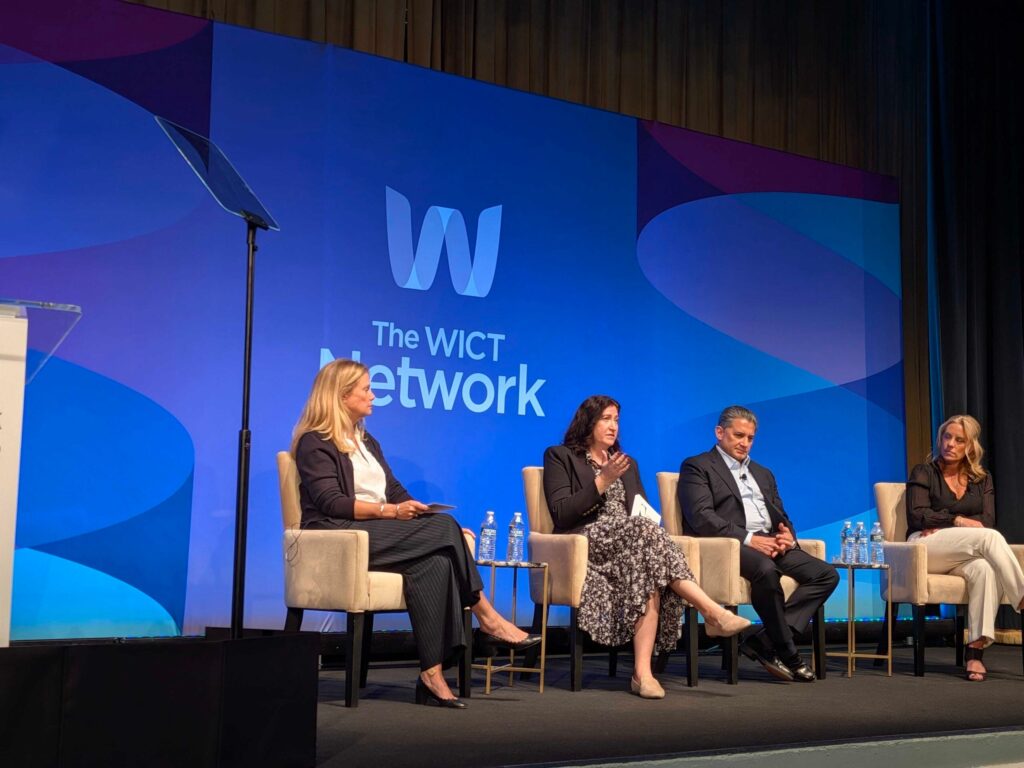
Toms will be speaking in a panel discussion “Building and Optimizing Social Media Strategies Today,” along with executives from Meta and American Eagle. His goal is to share with attendees how to think about and operate on social media platforms. His two largest takeaways are:
1. Don’t put social media in a box
“It’s important that you don’t think of it as one thing,” Toms said. “Even in one platform, it can be many things. Customers are spending so much time on the platform that it is a place where you can build a brand and it is a place where you can inspire someone to purchase. And it is a place where you can also get someone who’s right on the edge to actually transact.”
2. It’s all about variety, volume and pace of experimentation
“The folks that have the biggest and most successful programs and have built the biggest customer followings, are folks who know how to move quickly on the platform, who know how to authentically fit into the conversations that are already happening and who are always experimenting and learning and putting that through into the next bit of content that they’re launching on the platform,” Toms said.
How Wayfair Applies These Social Media Best Practices
For the home furnishings giant, that means tens of thousands of individual pieces of social media content each month. But if something is trending that day, the brand’s social media team should be moving within hours, Toms said.
For staffing at Wayfair, that means hiring talent who is native to the platform in terms of being a consumer and producer, Toms said. The merchant has about a dozen in-house employees responsible for the Wayfair handle across paid and organic content for all the social networks, he said.
“You need to give them the keys to the car and let them loose on the platform,” Toms said. “Particularly with organic content, it is about not taking many cycles and revisions and rounds of feedback because by the time you do that, the trend’s over and you’re onto the next thing.
A few large-scale trends that Wayfair quickly executed include the design trend costal grandma, the color butter yellow and pink corduroy sofas, Toms said. With the couch, an influencer in Wayfair’s creator program purchased a pink corduroy sofa and posted about it on TikTok. Sales took off.
“I’m not kidding when I tell you, it was probably the most viral thing that we’ve ever produced,” Toms said. “It became huge. She became huge as a result of it. And we went on a run of pink corduroy sofas that there were none to be found after this week. Everybody went out of stock because nobody anticipated that that would take off in the way that it did. But it’s things like that: That’s sort of where you have to be ready to move and ready to support it and ready to take off.”
Toms did not say how many Wayfair sold, only that the retailer sold out.
Connecting with other CMOs at Shoptalk
While at Shoptalk, Toms hopes to connect with other chief marketing officers or chief growth officers to trade notes on how they’ve seen the marketplace evolve. He is also looking to see how top marketers are using any new technologies, specifically artificial intelligence.
“Understanding where everyone is on the journey, where they’re finding real effectiveness and leaps for their teams,” Toms said. “In the past, it’s been measurement, but I think we’ve made a lot of progress there. So AI, both on internal use cases and on consumer-facing use.”
How Wayfair Uses Generative AI
For Wayfair’s AI journey, Toms said the retailer is both well into it and early. Today, Wayfair uses AI for multiple internal productivity use cases. One of the more exciting consumer-facing applications is with lifestyle imagery, Toms said. Wayfair uses AI generated life style imagery to help inspires shoppers and to help them search to find the right product.
The internally-built tool, called Catalyst, is on Wayfair’s “inspiration” tab, and allows consumers to search for a specific, long-tail search, such as “small, costal-looking patio tables, with urban brick setting.” The results will be AI-generated images, in which a real Wayfair product — that is in stock — is in an AI generated setting. This helps inspire shoppers to see furniture they are looking for in their desired context.
“That’s probably where we’ve made the most progress from a consumer lens,” he said. “And by progress, I really mean where we’ve seen the most consumer engagement and utility, and it’s been really helpful for them.”
Wayfair also built an AI styling persona, which is exactly what it sounds like, in which the styling of the photo is done with an AI agent, Toms said.
“The combination of those things where you have real products, you have proprietary lifestyle imagery, it’s well-constructed and made. It goes through rigorous QA by the time it gets to the site,” he said. “That’s a product that folks really get a lot out of and want to use. That’s probably where we’ve seen the biggest most exciting leap so far using the tech.”
Wayfair Emphasizes Trust in Marketing
Currently, Wayfair is continuing its “Wayborhood” brand campaign, which emphasizes Wayfair as a place for anyone to style their home. New for 2026, the retailer is shifting its message at a broad level to trust, Toms said.
Trust is a big factor in the home category in general, as they are big-ticket and emotional purchases, and consumers want to make sure they get it right.
“There’s a reason, historically, folks have wanted to go — what we even see in our store — they want to walk by a dresser and they want to rattle it. They want to shake it a little bit and make sure it’s sturdy,” Toms said. “These are big investments, and so you want to make sure you’re making the right choice.”
What’s more, consumer confidence is low and so shoppers want to make sure they are maximizing their dollar. Wayfair hears this message of stretched budgets and wanting to make the right choice when it talks to customers, Toms said.
“We want to make sure that we’re reflecting how the customer’s thinking in our marketing, and that’s why we’re going for it now,” he said.
Wayfair’s Touts its Curated Assortment in the Verified Program
How that shows up in marketing is emphasizing the services that Wayfair offers, such as its Verified program that is a curated group of products Wayfair vets with 10 inspection points. The retailer launched its Verified program in March 2025 in response to shoppers not wanting endless options — which may have been the case seven years ago — but now wanting a curated assortment and simplicity.
“That’s how we’ve seen the customer evolving, and so that’s how we’ve changed our offer. That’s how we’ve built new tech,” Toms said.
Other differentiating points are its delivery network and its expansion into physical stores, which allows shoppers to touch the products.
In ads, these offers show up as ease, he said.
“When it comes down to it, it’s not so much about, ‘Hey, here’s all these people who are going to be delivering this heavy thing into your house.’ But it is about you don’t need to think about it,” he said. “So one of our spots is you’ll see a woman being poured off of a hammock onto her new outdoor sofa.”
This ad resonates with shoppers because it translates to less stress and a time savings, he said. It’s a time savings in having to narrow down products and less anxiety when it comes to delivery and assembly. That all rolls up to trusting Wayfair, he said.
“Building trust with this customer base is what we focus on,” Toms said. “Everything we are doing as a business is focused on home, and it’s focused on making this journey easier for customers, whether that’s the AI imagery and helping [shoppers] take those ideas that are in their head, that they can’t describe in words and navigate, that’s about saving time, that’s about ease. Whether it’s about our delivery and service offerings. … It really is all about trust.”