Americans have long been known for loving cars. And Volvo owners are especially known for loving their vehicles, as evidenced by the myriad passionate owner groups, one of which even publishes a bimonthly magazine.
“There’s something very special about Volvo owners, and there’s some kind of connectivity between all of them,” says Janique Helson, Head of Brand Marketing, Content & Creative Services at Volvo Car USA. “Every time someone tells a Volvo story, it’s usually very soulful and beautiful, and it’s usually about their family and things that happen within the car and their family. And I felt like we had to start telling these stories.”
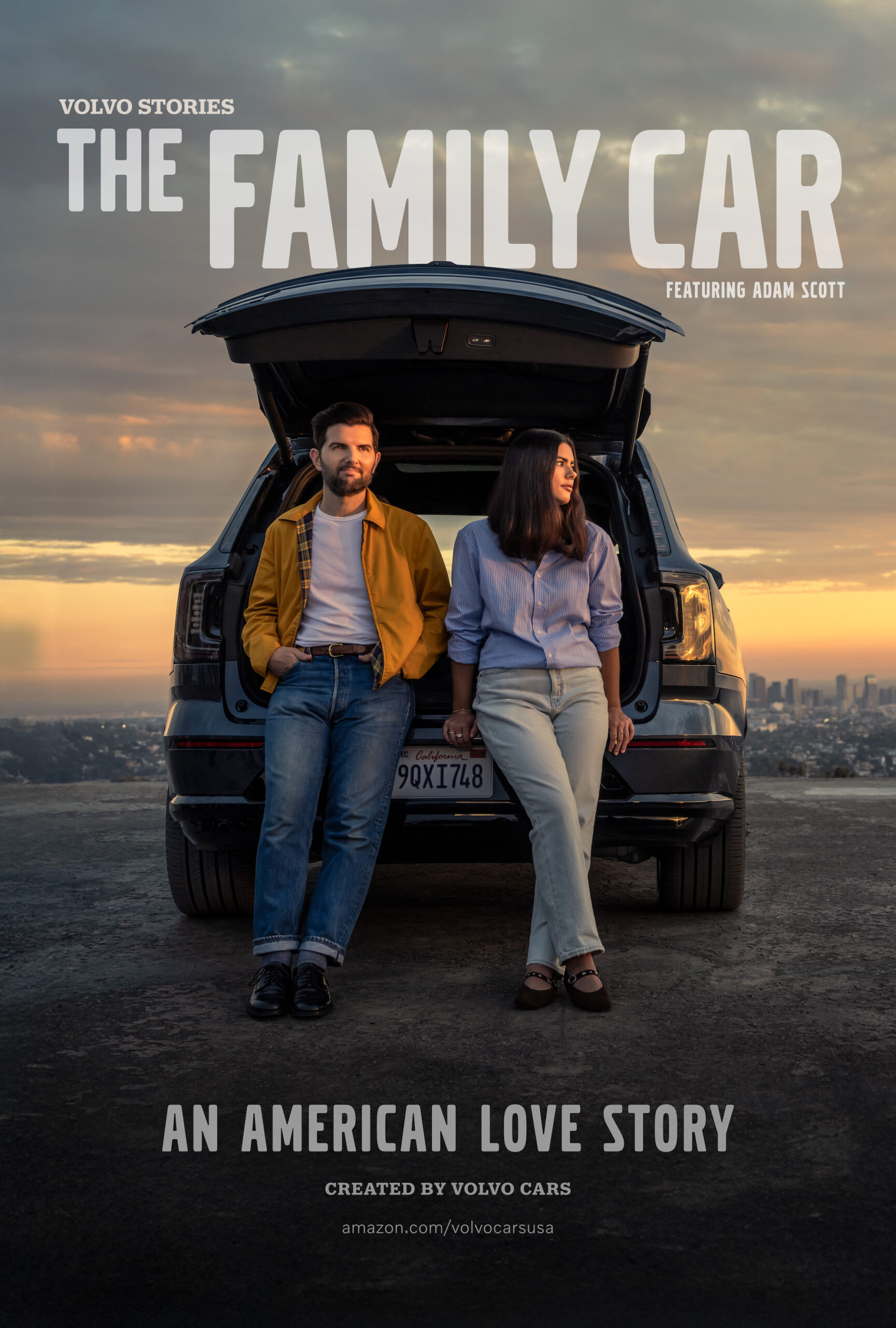
So when the Swedish automobile company was deciding how to celebrate its 70th anniversary in the U.S. market, Helson homed in on the bond between Volvo owners and their cars with “The Family Car: An American Love Story.”
A collaboration with Amazon Ads Brand Innovation Lab, the four-episode weekly docuseries debuted Nov. 7 on Fire TV, Amazon.com and YouTube. In each episode, a Volvo owner shares the importance of the brand’s vehicles in their family life. The first episode features photographer Gus Powell, whose works include a limited-edition book titled “Family Car Trouble”; in the second, musician Jahphet Landis discusses how his Volvo transported him and his family from Los Angeles to Miami in the wake of the L.A. wildfires. A feature-length film that will include all four episodes will begin streaming on Amazon video on Dec. 12.
An Emphasis on Premium Content and Casting
There’s no mention of mileage, towing capacity or other vehicle features in the episodes. “We were not going out to make ads,” Helson says. “We were going out to make content.” The participation of high-caliber talent such as Emmy-winning director Chris Wilcha and “Severance” star Adam Scott — a Volvo owner spotlighted in the fourth episode and the narrator of the streaming feature — underscores that intent.
So does the choice of Amazon as a partner. “Amazon is absolutely one of the venues you go to to see premium content,” Helson says. The conglomerate’s reach was another reason Volvo chose to work with them: “I mean, there’s not a person I know who doesn’t have a Prime account,” says Helson. Amazon is promoting the series through its paid and social channels, and the talent are spotlighting it on their social feeds as well.
As with most other premium content, casting was crucial. The people featured “had to have had an authentic Volvo story. It couldn’t have just been ‘I had a Volvo’ or ‘My parents had a Volvo.’ They actually had to have a really authentic Volvo story that they were willing to tell,” Helson explains. Geographic and individual diversity was important too. “Most of [the participants] brought in their families as well, which is really important to us because it is the family car,” she adds.
Leaving the Predictability of Automotive Advertising Behind
Brand awareness and bringing new consumers into the Volvo family are the campaign’s key goals. “We have to start to show Volvo in a way that just feels very current and very much part of culture, which we are,” Helson says. “We really wanted to open the aperture to show that Volvo has always been in culture, to bring that to the forefront to make sure people know we stand for something.”
With this content-driven approach, Helson hopes to celebrate the human connection in a way that advertising typically doesn’t allow: “In advertising you’re just telling people what to think and my objective with this was really to not just for people to listen, but I wanted them to experience something.”
Helson is quick to add that Volvo isn’t abandoning advertising; traditional approaches are necessary for communicating the benefits and features that help close a sale. But initiatives like “The Family Car” “get people curious about your brand and get them to feel something in your brand,” she says. “I think that strong brands with something strong to say that really stand for something should be in a place where you actually want to watch them say it.”
And because Volvo is, in Helson’s words, a “soulful” brand, it has the ability “to do something that leaves the predictability of automotive advertising a little bit behind,” she says. “We have to try something new because the rest of it is so crowded. I don’t know if all brands can do this, but we can.”