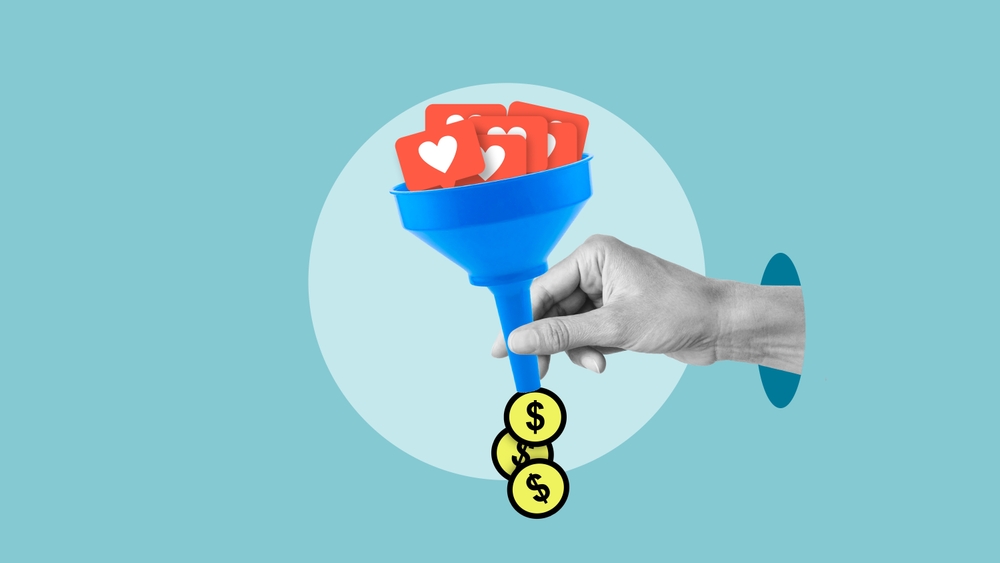
The greatest challenge brands face today is managing short-term performance demands while still investing in long-term brand equity, says Michele Madaris, Media Director of Boathouse. “Brands that previously went all in on performance are realizing they can no longer achieve historical success,” she notes. “The pendulum is swinging back toward brand building as a strategic growth driver that makes every other dollar work harder.” Here, Madaris offers her perspective on navigating that challenge.
Chief Marketer: What are the key pain points for brands right now?

Michele Madaris, Media Director of Boathouse: Brands are under pressure to deliver growth in a landscape where consumer attention is more fragmented, costly and less predictable than ever. The biggest challenge is balancing short term performance pressure (and expectation) with the need to build long-term brand equity. Growth has become harder to maintain when every dollar is expected to perform immediately, leaving no time (or patience) for storytelling and trust building that fuels future demand.
At the same time, the continued proliferation of media platforms and choices coupled with complexity of measurement have made it harder to see what’s truly working. Marketers have plenty of data but struggle to connect it in ways that informs smarter decisions and aligns to what is truly driving business outcomes.
CM: Which verticals do you think face the biggest marketing challenge?
MM: Every category is feeling challenged, but the pain appears most apparent in categories like healthcare and financial services which historically depend on performance-driven acquisition. These industries face increasing regulation, privacy constraints and rising media costs, making it harder to efficiently acquire and retain customers.
In healthcare and financial services in particular, brand trust and credibility play a significant role in driving choice. Historically, these brands have skewed marketing investments towards performance tactics and under-funded brand building. Slowly but surely, brands in these categories are realizing that without a consistent brand investment their performance engine won’t scale. Those that recognize the benefit of both will succeed long term.
CM: What’s the biggest strategic blind spot you see in how brands are approaching growth right now?
MM: Too many brands still operate as if growth is earned only at the bottom of the funnel. That thinking misses how non-linear the consumer journey has become. People no longer move neatly from awareness to consideration to purchase anymore. They bounce around across countless touchpoints.
Real growth happens through influence. The collective impact of every interaction a consumer has with the brand, from a story they see on connected TV to a review on Reddit, a friend’s recommendation, or a retargeted ad. When brands focus exclusively on lower funnel efficiency, they overlook how those upper and mid-funnel interactions influence intent and improve conversion. The leaders in growth have recognized this and are architecting communication plans for this type of experience rather than focusing on that one moment of influence.
CM: How are brands rethinking the balance between brand building and performance marketing in today’s environment?
MM: There seems to be a shift in recognition that brand and performance are not opposing forces but complementary ones that can, in fact, multiply one another.
The most forward thinking marketers are building multi-touch ecosystems where upper funnel storytelling fuels mid- and lower-funnel efficiency. They’re leveraging premium environments, like TV, CTV and high-attention digital channels, to rebuild trust and drive emotional connection, while ensuring those exposures are measurable and accountable to business outcomes. It’s not brand or performance it’s brand and performance to achieve the optimal outcome.
CM: What’s changing most about how brands define and measure effectiveness?
MM: Effectiveness today should be defined around business outcomes, not marketing metrics. With every dollar under intense scrutiny, brands are less interested in reach, clicks, or engagement rates and more focused on incrementality; understanding what truly drives a net new customer or sale that wouldn’t have happened otherwise.
This shift is forcing marketers to think beyond attribution models and lean into experimentation, modeling, and data integration to isolate real impact. Incrementality is becoming the new gold standard because it ties investment directly to measurable growth. The question isn’t “did the campaign perform?” but “did it drive business that we wouldn’t have normally?” The brands that can consistently answer that with confidence will have a clear competitive advantage.
Lynne Leahey is Editorial Director at Cynopsis, a Chief Marketer Network publication.