Federal rules requiring the inclusion of women as participants in most NIH‑funded clinical research were not put in place until 1993. That history is one of the core reasons Evvy CMO Laine Bruzek and her cofounder launched the company and a main driver of its strategy. If the female body has been under‑studied, she argues, entire categories of biomarkers have been overlooked, especially in areas like vaginal health, which is both common and stigmatized.
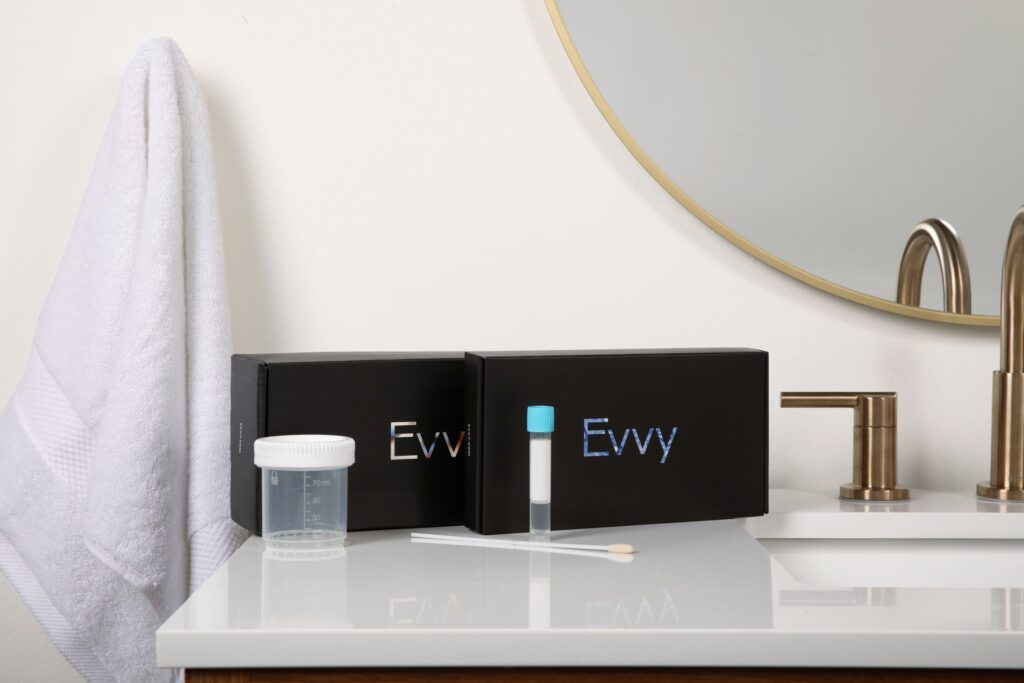
Evvy focuses on the vaginal microbiome through an at‑home test, a clinical care platform and an education engine aimed at correcting misinformation. Because the space is saturated with dubious wellness tips and content that feels copied and pasted, Evvy’s marketing is tightly coupled with its mission to make the experience clinical and trustworthy, but also culturally fluent enough to show up in people’s feeds.
Bruzek explains why Evvy is product‑led, how humor and short‑form video fit into a science‑backed brand and where she draws the line on AI in health education.
@evvybio Learn more at the link in bio ⬆️ 💙#vagtok #evvy #womenshealth #bacterialvaginoisis #yeastinfection #vaginosisbacterianavscandidasis #periodproblems #periodtips #seggseducation #femininehygiene ♬ original sound – vltor1
Chief Marketer: Before channels and tactics, what is the core philosophy behind your marketing strategy? 
Laine Bruzek, Cofounder and CMO, Evvy: The fundamental way that we are approaching marketing is product‑led. Our first focus is developing a great product and a great experience. And that helps a lot with the marketing strategy overall.
This is a clinical care platform that can help people who are struggling with vaginal symptoms and even provide access for people who might not have an OB/GYN.
If you can provide an amazing experience, the rest will follow.
CM: Once you have the marketing foundation in place, where have you found the most success in reaching your customers in terms of channels and creative?
LB: We absolutely rely on all the classic channels. But the ones that we are particularly good at are where social meets education. Evvy’s special sauce in marketing is that we are science‑backed and culturally fluent — and that comes out in our TikTok videos.
It’s really hard to be both a clinical, science brand and also understand culture and authenticity enough to make a funny TikTok. [It’s about] how you do both sides at once.The medium that is best for that is short‑form video. So whether that’s on Instagram, TikTok, you name it, that is where we have gotten the word out about Evvy.
If you have that humor hook, then you can bring people along to the education too. Because humor is actually a way of building trust.
CM: There are lots of companies claiming to be “backed by science,” but not all of them walk the walk. How do you prove your legitimacy to consumers? What are some actual tactics you use to build trust?
LB: We start by actually being backed by science — we invest in original research, conduct IRB-approved clinical studies, publish in peer-reviewed journals, and continuously improve our platform using real-world data from one of the world’s largest vaginal microbiome datasets.
Just as importantly, we’re transparent about what we know, what we don’t and where science is still evolving. Women’s health has been under-researched for decades, so pretending every answer is settled would actually undermine trust. We pair that transparency with clinician-reviewed care, personalized education, and one-on-one coaching because trust is built through every part of the patient experience.
CM: You mention you do your own studies. Is that how you stand apart from some of the health misinformation happening on social media right now?
LB: Partly, yes — we comment on the gender health gap and help close it through our own research. But you don’t have to generate your own research to fight misinformation online. What’s often missing is rigorous science and medical review on the content that reaches people, and more partnerships between great communicators and great scientists. At Evvy, we place equal value on both — so that the science can really spread and the storytelling never outruns the substance.
Correcting misinformation starts with understanding why it exists. Most people aren’t trying to spread bad information — they’re looking for answers in a healthcare system that hasn’t always served them well. So we meet people where they are instead of scolding them for getting it wrong, and bring them along with the actual science, told in a way that’s built to resonate. And when the research isn’t settled, we say so — we always try to be honest about the nuances and gray areas that are fundamental to science education.
CM: Where does AI fit into your marketing and content operations, and where do you draw a hard line?
LB: We use AI to do research and look at what our users are asking online, like what conversations do people want to be involved in.
But when it comes to our actual science and education writing, it’s 100% human. We have a team of science writers. We have medical reviewers. We have science reviewers. We have a head of content that keeps it all on track.
What could be more human than vaginal health? I don’t think you can build a great brand on AI slop. A great brand has to be authentic and has to bring something new to the conversation.
CM: Trust is not as simple to measure as clicks or open rates. What signals do you look at to know whether your marketing is actually building trust over time?
LB: Obviously, the number one signal of trust is whether they come back and trust you with their healthcare. So that means transacting with us in some way, and trusting us with your vaginal health. If you buy another test from us, if you engage in clinical care, that’s the strongest signal of trust.
A lot of times we’re looking at how long customers spend on our blog. Fifty or sixty percent of our blog posts have a read time of over 60 seconds, meaning people are actually landing there, staying and learning something.
Of customers who are already with us, and they’ve purchased something from us, almost 90% of them are engaging with our blog content in some way. What I’m looking at is not just how the product is doing from a sales perspective, but also how our content is doing from a read perspective. Is it genuinely useful to people?
CM: You’ve hinted that Evvy won’t stop at vaginal health. How are you thinking about expanding into other areas, and what will that mean for your marketing?
LB: We are actively expanding. We have exciting initiatives underway later this fall. Specifically, it’s going to be in fertility. Last year, we launched Fertility Insights, which gave people a much better understanding of how their vaginal microbiome may be impacting their fertility based on available research.
What I’m proud of about the Evvy platform is that, from inception, it has been for all ages. Truly, 20% of our customers are in perimenopause or menopause. We have people as young as 18, and as old as 80. We are actually able to be with a woman throughout her lifespan. So whether that’s vaginal health in college, STD testing potentially, through fertility and trying to get pregnant, through pregnancy, into postpartum, from perimenopause into menopause, we truly are with women at all stages of life on their journey.
When we think about how we are going to expand, we actually already have a home base across the lifespan. We are attracting all those folks to our platform, so our next step is developing products and services that can serve those people based on where the science is. Our expansion plans are based on our R&D efforts and how we can look at the biomarkers that exist in the vaginal microbiome, and how we can do the right studies to commercialize some solution for those people.