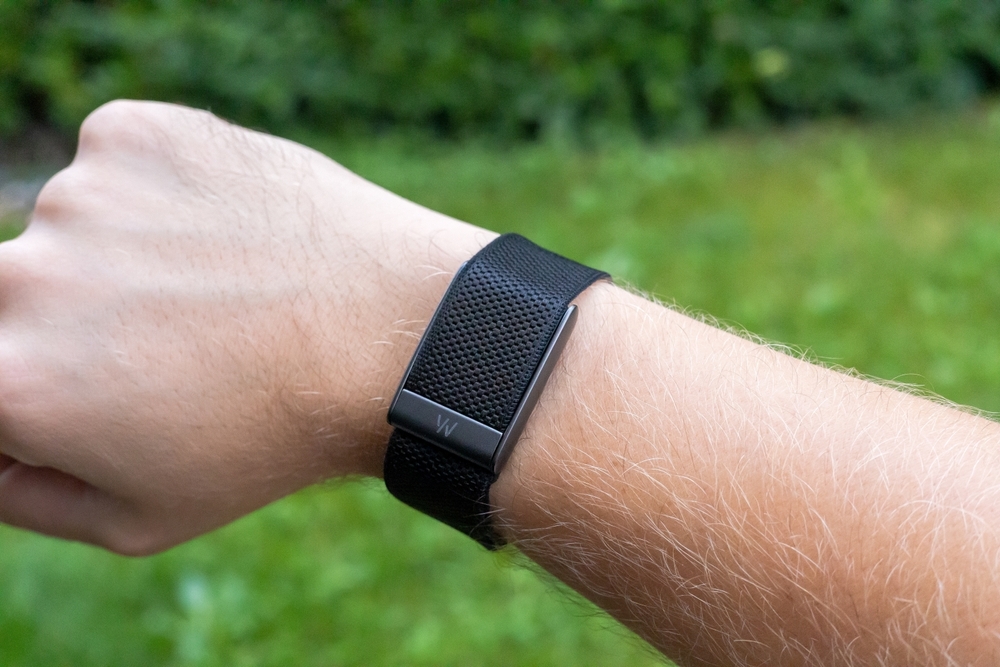
The brand’s marketing pivot to everyday consumers fueled 85% member growth and a surprise 300,000-unit holiday order. Here’s how the health wearable is retooling planning to keep pace.
Increased awareness, surging sales and overall growth are a boon for any brand. But for the operations team, growth spells complexity. Marie Fodness, Assistant Vice President of Global Operations at health wearables brand Whoop, knows this story intimately.
“We’ve grown really fast in a lot of different directions,” Fodness told attendees at the o9 Solutions Aim 10x Summit in Chicago in September. “That includes retail channels, new countries, new markets, enterprise deals. And it has not just been more units, it’s been more complexity.”
Whoop launched in 2012, but in the past three years the brand has grown dramatically.
The health wearable has more than 3 million members who use the product daily and pay a recurring subscription. Its membership has grown 85% year over year, and this is the third consecutive year with more than 70% growth. Whoop’s members are located in 200 countries, even though Whoop ships only to 58, Fodness said.
Whoop Pivots Its Target Market
Many factors are contributing to this growth, including whom it is marketing its product to. Initially, Whoop geared its performance wearable toward elite athletes. Whoop’s founder and CEO Will Ahmed had the idea for the product while he was a Division I athlete at Harvard. His goal was to understand how technology could measure the human body to unlock performance.
This marketing tactic worked, as Whoop signed a number of elite athletes, including Cristiano Ronaldo, Rory McIlroy and LeBron James. In fact, all three of those athletes became investors in Whoop during its Series G funding round, which was a $575 million raise in March 2025, bringing Whoop’s valuation to $10.1 billion.
But there are only so many elite athletes in the world. And so the brand pivoted to market its product to the average consumer so they could unlock better performance in their everyday lives.
“This transition into the everyday person, connecting people to how they can make their bodies feel better, led to an incredible amount of growth,” Fodness said.
This growth keeps compounding as Whoop gears its products toward overall health, not just exercise performance. For example, its newest fifth-generation product, which launched in May 2025, is more focused on longevity, with features such as blood pressure insights, women’s health tracking and integrations that let consumers load bloodwork lab results into the app, Fodness told Chief Marketer.
Whoop Expands Into New Markets and Merchants
As more consumers use the product, its brand awareness is growing. In 2024, Whoop started aggressively expanding internationally, Fodness said. She joined the company in January 2024, and within her first three months, Whoop expanded into 26 countries.
“We’ve seen an explosion of wholesale, of retail and brick-and-mortar, and marketplace success in the last year and a half,” Fodness said. “We associate a lot of that with brand recognition. People don’t just go to the Whoop website when they’re looking for Whoop because they know about it more frequently. But also, as we’re trying to get deeper into markets, we’re finding that it’s a really, really strong growth lever.”
Whoop’s wholesale bookings increased 300% in the past year, and that portion of the business is getting close to pacing with its primary direct-to-consumer channel, Fodness said.
But this adds more complexity. For example, in each market, Whoop needs to consider what it puts on its packaging and ensure its the copy is translated, she said.
“Growth like this does not come in a clean forecast,” she said. “There’s no Excel sheet that has modeled out how we’re going to grow in all of these different directions.”
Whoop’s Hypergrowth Comes at a Cost
The brand also found that while it was growing, its own internal systems were a bottleneck to its success. For example, Whoop’s commercial team went to the Innovation for All Conference in Berlin in September 2025 and returned saying it needed 300,000 units before the end of Q4. Retailers wanted more Whoop products to sell for the holiday season, but the brand had not planned for this.
It took the brand about 25 days to determine whether its supply chain and manufacturing teams could do this in time, whether it could source the chips and whether it was worth the cost.
“We pulled it off, but it was a really chaotic way to achieve additional growth,” Fodness said. “There are so many ways for us to do this better and we need to get cleaner as a business to make sure that the next time we are asked to support hypergrowth and exciting opportunities, we’re not costing the business resources and eventually some margin.”
Updating Its Planning Software to o9
This experience was the launch pad for Whoop to update its supply chain planning software. After vetting seven vendors, Whoop chose o9 for all of its demand and enterprise planning. The brand is just starting to build the system, and it will take about a year to complete. This is a typical time frame for a transformation of that size, said Santiago Garcia-Poveda Maria, Senior Vice President of Retail, Distribution, Apparel and Footwear, at o9 Solutions.
Once the new system is in place, Fodness said Whoop would be able to make a decision on a large demand signal — such as the last-minute production of 300,000 units before the holiday season — within 48 hours.
The speed will come from having all of the data in one place and clean information feeding the system, she said. Currently, a lot of teams are making plans in Excel sheets, which can be manually tweaked and add complexity.
“Tribal knowledge can end up adding time because there’s only one person who knows exactly the details,” Fodness said. “All of it living in o9 will then give us that ability to pull down the information that we need to make those quick decisions.”