One pill to make your skin better? That’s a message that is resonating with men.
This insight was at first surprising to Florastor, when the probiotic brand was conducting product research for its just-launched Digest + Skin Renew probiotic. But after probing men more about why they were interested in the product, it does make sense, said Chief Marketing Officer Bindu Shah.
“Their story was simple,” Bindu said. “They said, ‘Basically, women use and do so much for their skin. Men don’t do anything. If you’re telling me one capsule is all I need to take care of my skin, I’m done. That makes sense to me.’”
That insight was very telling, Bindu said, and makes Florastor optimistic its new product can speak to a large audience. Biocodex, the pharmaceutical brand that owns Florastor, developed the skin probiotic over a year and a half.
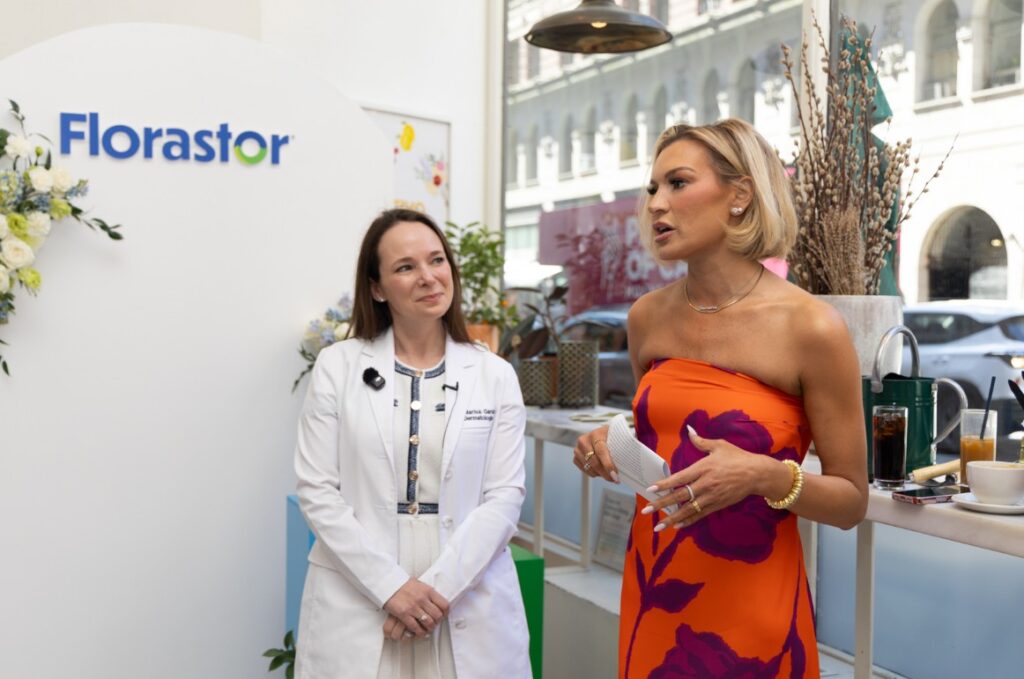
The brand is at the start of its marketing campaign for its Digest + Skin Renew probiotic, which includes earned media, social media influencers and two spokespeople including dermatologist Dr. Marisa Garshick and reality TV star Lindsay Hubbard.
Overall, consumers understand probiotics as a benefit for gut health, Shah said. But for Florastor’s newer products, such as is Her Florastor, which is for vaginal microbiota, and this new product for the skin microbiome, the campaign centers on awareness and education, Bindu said.
“Especially in the first year of any launch, your ROI is not going to be huge because you’re creating a new benefit area,” Bindu said. “Our job, as a company, is to educate consumers to the best of our ability on, ‘Hey, there’s a microbiome for your skin. You have one and we can help it be stronger.’”
Shah sat down with Chief Marketer to chat more about marketing the new product, challenges of working with creators and courting young shoppers at Target.
Chief Marketer: How do you think this new skin product will compare to the women’s product that you launched last year?
Shah: I think it should be comparable, if not stronger. And the reason why, it was unique, but you still had a very crowded women’s health probiotic setup. We were a little bit — not late to the party, because we brought something new to that category — but you still had a lot of options out there.
Here, we’re one of the very few. So I expect, while the audience might not be the same as women’s health, in terms of the amount of people that you’re targeting, that’s something we’ll have to see.
Chief Marketer: Who are you targeting for this?
Shah: We’ve seen men be very interested in this idea. In talking with retailers as well as the consumer research, 50% of the product interest was with men, which is astonishing to us.
Chief Marketer: In general, does Florastor have a 50-50 split between men and women for their products?
Shah: Florastor is typical of supplements where women do typically carry the higher ratio in general because they’re the ones who are shopping for it too. That’s why the 50-50 split was surprising to us because that’s not true of our general demographic.
Chief Marketer: Do you think sales for this product will skew younger, because of the younger generations are caring more about appearances and their health?
Shah: Younger consumers, they appreciate science a little bit more. They are flooded with a ton when it comes to social media and you just have so much coming at them. And so it can be hard to really distinguish within probiotics because it’s a clutter category, and it can be confusing as well.
And so for us to really show up as the voice of science, and so that’s why bringing someone like our dermatologist in, but also bringing someone who is culturally relevant like Lindsay Hubbard is a really nice marry between the two.
We’re not targeting anyone younger than say 30, but Target is carrying us. Target tries to resonate with a bit younger consumers, maybe not as young as 30, but they’re known out of all the retailers [as] the one that’s a little bit trendier, outside Sephora and Ulta. But yes, I do think it can veer younger.
Chief Marketer: Target’s more trendy compared to which retailers?
Shah: If you look at drug retailers, they’re great because they can solve an immediate need. For Florastor, they do an amazing amount of business because a lot of our consumers come in with maybe a digestive issue. They’re coming up with antibiotic script.
I would say Target in general can be seen as the place that you go for discovering new brands. When I was there, they just reset a lot of their sets and they definitely lean into new brands and new products and ingredients a little bit more than maybe traditionally Walmart has. They’re trying to lean in and do a little bit more with [supplement brands] Lemme or with Bloom, but Target has traditionally held a lot of that mind share space with consumers of discovery.
Chief Marketer: Do you see in your data that Target is a higher customer acquisition channel than the other retailers?
Shah: It’s harder to see right now because Target has gone through some of their challenges as a retailer over the past two, three years from a cultural context standpoint. At a macro level and they’ve had some changes in their leadership too. Traditionally it was that space of discovery and then you see Walmart stepping up.
If you look at what the buyers have done with vitamins, minerals and supplements, and with digestive and probiotics, they’re stepping up. But they’re also very smart to know, okay, I need my legacy brands because they’re the ones that consumers know and trust. But I also need the new brands, the new ingredients, the new storytelling, because that’s a lot of what influencers, TikTok and social media is doing. They have to find the balance, but they’re never going to find the right balance because consumers can be fickle.
Chief Marketer: How did you choose Lindsay Hubbard as your spokesperson when you launched the Her Florastor product? Why did you choose her as your spokesperson again?
Shah: For a brand like Florastor, we’ve been around forever. Globally, it’s a drug; in the U.S., it’s a dietary supplement. And so, [it’s] trying to find someone who can be serious enough about the brand where you’re not diminishing the credibility, but also bring their own personality and their own authentic experiences because that’s what their followers resonate with. So Lindsay Hubbard, she was just a great meld of that.
We partnered with her for Florastor Hers launch. She was just authentic as well as being impactful with her audiences, with the media interviews, just how people resonated with her. We could see the increases when it came to Google searches and even just our own DTC site. As just an example, when she’s doing those media interviews, you can follow it because she’s talking and then people are searching. She became a natural fit for us this year because she is very intentional with her health and wellness.
Chief Marketer: What are some of the challenges of working with a creator?
Shah: We want to make sure that they can speak authentically about their experiences again with our brand because that’s in the lens of what they’re talking about. But at the same time, because we hold our equity very tight and our scientific integrity, we need to make sure they don’t deviate too much into areas that we can’t say or maybe stretch a little too far.
So, for example, if you, April, are our creator, and authentically you have severe gut issues and you took Florastor and it did wonders for you, that’s awesome. I want that story, but I have to temper it down. I can’t have you say, ‘I had severe gut issues,’ because that goes on to disease territory and we don’t treat diseases.
It is always that balance of, we want people to speak about what they’re dealing with and how hopefully our products have helped them, but we also have to make sure that we stay within the constrained space of dietary supplements because we cannot promote or endorse anything that we’re not supposed to. That’s either because it’s a disease state or it’s a claim that we can’t substantiate.
Chief Marketer: How do you make sure that you do stay in those parameters?
Shah: How that process starts is we have a brief. We have to be mindful of, ‘here’s the claims.’ We don’t want you to recite the claims. I don’t want you to say 40% more radiant skin, 65% worse … That’s us talking.
We’ll give that to you just so you know what it does and brief you on the product, but we also have a list of don’ts. Don’t say this, don’t say that. Don’t say that you have crazy bad acne and it cleared it up. Even if that’s true, I can’t substantiate that claim. It’d be great for us to know that, but I can’t back up that claim.
We have tight guardrails. It can be a challenge, honestly, because I see a lot of brands out there that push a lot of things that are not credible. But we also have to make sure that we’re doing what’s right by consumers, by FDA and FTC standards too, because we don’t want to be one of those brands that is kind of ‘wild, wild west’ with their claims.
Chief Marketer: How many influencers do you work with?
Shah: We’ve been doing it for probably at least a year and a half — more heavily focused on influencers. We just engaged with a new agency that we’re very excited about, probably about two, three months ago. Our intention is at a high level to have about at least 50 pieces of content every month, but we also have a lot of pieces of our portfolio that we’re supporting with that.
This interview has been edited for length and clarity.