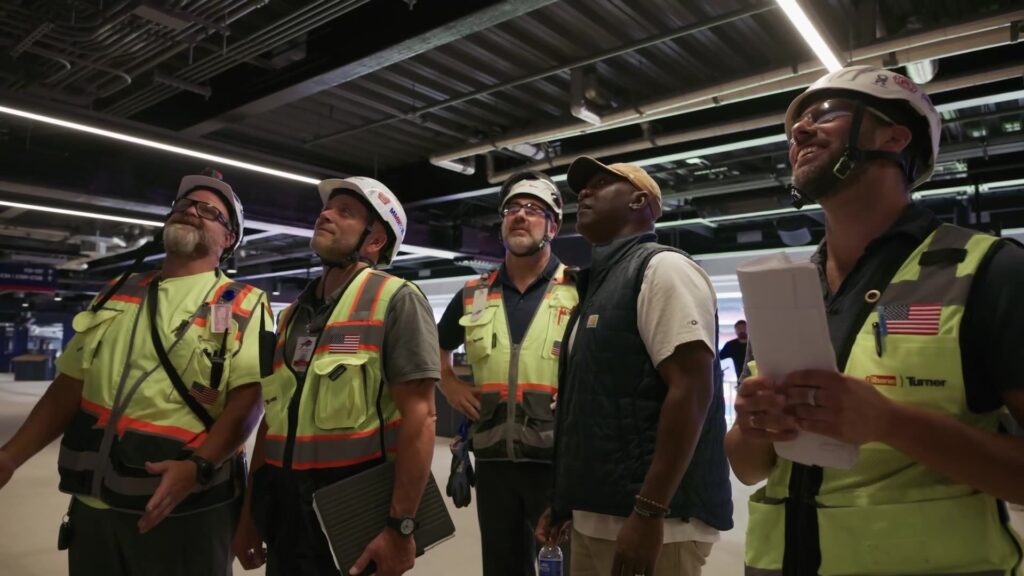
Carhartt is in the second year of a campaign that highlights the labor and workers behind building Highmark Stadium, the new home of the NFL’s Buffalo Bills.
The first iteration of the campaign kicked off last season as work was underway and showcased the many skilled trades that go into building a stadium.
“The overall brand demand for this campaign exceeded our estimates by 20%,” said Norma Delaney, Vice President of Marketing at Carhartt.
Carhartt draws that conclusion from a Google brand lift study that looks at brand interest pre-campaign and during, based on search volume, social media engagement and dollars, she said. Carhartt also chose products that are “important commercially” in the campaign and it monitored sales metrics with those items.
Making Football Possible
Now, the stadium is finished and Carhartt’s just-launched campaign — “Making Football Possible” — is shining a light on the fruits of their labor.
Along with the main hero spot that shows all the elements of building the stadium, it also has a two-minute spot that features former Buffalo Bills player Thurman Thomas. It also has a spot that features both Thomas and current running back James Cook.
Carhartt will be measuring the success of this brand awareness campaign with engagement and awareness scores for its content. It also has a billboard in Buffalo, New York, that thanks all of the workers who built the stadium. Plus, the first 20,000 fans at the first home pre-season game will receive a Carhartt rally towel that lists the names of the 5,900 tradespeople who worked on the stadium.
Many of those workers were local, which is why the marketing investment is heavy in Buffalo. But Carhartt will be running campaigns nationwide throughout the NFL season.
“This kind of work happens across the country,” Delaney said. “Not a professional stadium, but people are building fields at the college and high school level. And so everybody can kind of relate to it, but probably isn’t thinking about the work that goes into it.”
Carhartt does not typically advertise in conjunction with the NFL season, and “it flipped the script” for what brands usually do, such as putting their logo in the stadium and marketing to the viewers.
“It’s more about being able to be culturally relevant around the trades,” she said.
Made Possible Platform
The two-year initiative with the Buffalo Bills debuted Carhartt’s “Made Possible” platform that the brand plans to use for years to come, Delaney said.
After the first Buffalo Bills stadium spots during the 2025 NFL season, Carhartt had spots with the TV show “The Road.” Those ads showcase the durable clothing the backstage workers wear to build concert infrastructure. During the holiday season, Carhartt featured the laborers who put together an outdoor ice rink and worked on a tree farm.
“Fall ’25 was really about seeing the depth and breadth of the platform and giving us that opportunity to lean into it and take it in some unexpected directions going forward,” Delaney said. “For us as marketers, it really proved the fact that it’s a wonderful platform. We can take it anywhere.”
Inspiring Next Generation of Tradespeople
One of the large goals of the campaign is to drive awareness around the importance of the trades. Carhartt has a large content area of its site called “Join the Trades,” which shows pathways to receive training for a trade. Carhartt works with the National Center for Construction Education & Research with the content and job listings on the Carhartt website.
Because one of the calls to action of the campaign is to join the trades, Carhartt also is evaluating site traffic to this area of its website as a campaign key performance indicator.
Tradespeople are Carhartt’s target customer and make up the large majority of sales, Delaney said.
In the U.S., there is a growing shortage of workers in trades positions, such as construction, electricians and plumbing, as more workers are retiring faster than young people are replacing them.
“It should really be concerning all of us,” Delaney said about the trades gap. “I can’t say that necessarily we’re any different from other companies. It’s more about making sure that the infrastructure of the country is solid and making futures possible.”
Carhartt’s Goal: Authenticity with Targeting Tradespeople
All of Carhartt’s products are “work-site tested” and built with the intention of people wearing them on a job site, Delaney said. Some consumers, however, will wear Carhartt products for everyday wear. This is a complement to the brand but Carhartt does not pursue those consumers, she said.
“When you chase it, you’re moving away from your authentic core,” she said. “We’ve been building products for workers for 137 years and we have a great clarity around that. And it makes my job as a marketer actually easier because I can really lean into that.”
Shoppers appreciate when brands are authentic, and brands are strongest when they stick to their core and build on it, Delaney said.
“You can’t control the consumer’s response to your brand,” she said. “You can control whether you proactively go out and chase them. I’ve seen plenty of brands do that and it dilutes it and it’s very hard to get it back.”