New data finds that 50% of brands are looking to operate pop-up shops for three days or less, with many brands looking to use the physical space as a marketing campaign. Pre-holiday buzz and the fashion calendar make September the most sought-after month.
Pop-up stores can drive a lot of value for a brand from testing a geographic market to a splashy marketing campaign.
Many brands are opting for short-term pop-ups to create urgency and turn a store into news, Nicholas Roberts-Moore, Chief Marketing Officer at pop-up marketplace Storefront, said in an email. New data from Storefront backs this up as brands request on average four days for a pop-up shop.
In fact, 80% of brands ask for the pop-up to be two weeks or less. Roughly 70% request a week or less, nearly 50% ask for three days or less, and roughly 20% of brands only want a single day, according to Storefront.
Storefront used global data from the 12 months from June 2025 to June 2026, which included 20,000 inquiries for pop-up shops in 21 countries from more than 7,000 brands. Storefront notes that these are requests, as brands may look at several pop-up operators before selecting one, and a brand may run several pop-ups in a year.
The short-term stint can accomplish multiple things, Roberts-Moore said, including:
- Buying an address in a high-profile location that the brand could never lease. Brands can justify the expense as a marketing cost, getting the benefits of the address for the price of a marketing campaign.
- Hosting a product launch with a physical space where influencers, media and customers can be in one room.
- Creating a year of marketing content in a branded space that can feed social and paid creative.
“For most brands, this is a marketing campaign that happens to have a register in it,” Roberts-Moore said.
Most Brands Plan Pop-Up Shops In 3 Months or Less
Most brands, at 42%, make their first inquiry with Storefront one to three months ahead of opening. Here’s how planning lead times break down:
- Less than a week – 6%
- 1-4 weeks – 24%
- 1-3 months – 42%
- 3-6 months – 19%
- More than 6 months – 9%
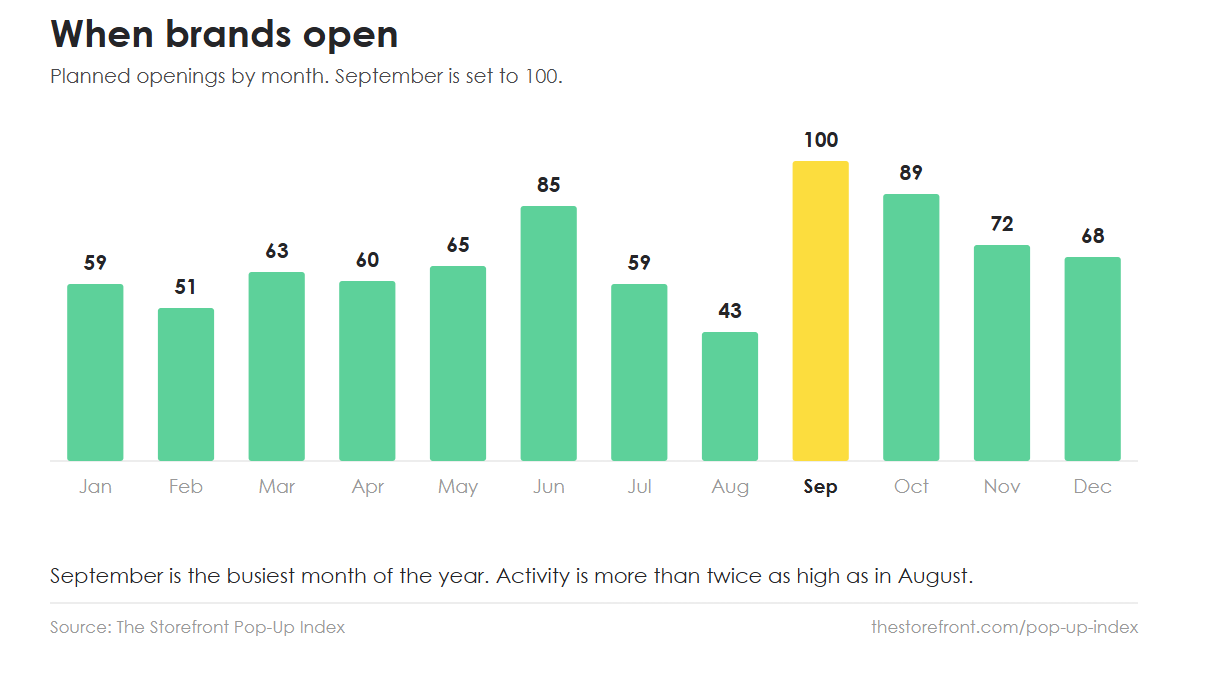
And September is the busiest time to do it, the new data from Storefront finds. This is likely because the fashion calendar and the holiday buildup land in the same month, Roberts-Moore said. Fashion showrooms concentrate almost entirely in September and February, and many brands want to launch a product early in fall to build momentum for the holiday season, he said.
September, October and June are the busiest months, based on planned openings averaged across two years. September is twice as busy as August, as many consumers are on vacation during the late-summer month and many European stores close. When just looking at the U.S., January is the quietest month for pop-up shops, as seasonal stores have just closed and shoppers are not spending as much after the holiday season.
Costs vary widely by city, but rent costs typically range between $2,000 and $3,000 per week, according to Storefront data. This does not factor in staffing, utilities, insurance and marketing. “Entry-level” spaces on a global average cost $600 a week for a pop-up. These are often small units in a weak location, such as a room inside a larger venue or a unit off the main shopping street. A prime location, such as a high-demand shopping area like Beverly Hills, can cost $10,000 a week or more.
Where Brands Want to Pop Up
Paris, New York, London, Los Angeles and Milan are the top cities where brands want to operate a pop-up shop. Storefront used its own data and ranked cities according to the number of brands that inquired about opening a location.
U.S. brands are most likely to test a pop-up store, making up 30% of brand operators, the data found. Brands based in the U.K. were the second most likely to operate a temporary store at 10%.
Fashion brands account for 57% of the merchants looking for pop-up space, more than the other four categories put together. By category:
- Fashion – 57%
- Art and galleries – 15%
- Food and drink – 10%
- Design and homeware – 8%
- Beauty – 7%
Technology and smaller categories make up the remaining 3%.
Pop-Up Shops Acquire New Customers
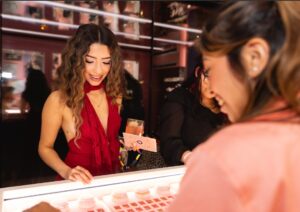
Jewelry brand Pandora, for example, operated a month-long pop-up store in Los Angeles during October. The goal for the pop-up was to acquire new customers, which Pandora achieved, as 80% of the sales at the store were from new customers, said Colby Jarvis, Marketing Director at Pandora.
“Our No. 1 KPI was getting new customer acquisitions, in terms of getting new customers to look at Pandora and be introduced to the brand, which they might have been aware [of] but might not have considered buying the product,” Jarvis said.
These performance indicators are hard to measure, Jarvis said, but the large percentage of new customers was a strong success indicator. The brand also looked at traffic and sales. Both of these metrics were in the top percentile compared with Pandora’s 12 other L.A. area stores. What’s more, the units per transaction at the pop-up was 2.86, which was higher than that of the L.A. fleet during that time period.
“It was a fantastic metric to actually see that there was such a high number of new customers coming through and were actually responding and buying the product,” Jarvis said.
Pop-Ups As Pure Marketing
While Pandora’s pop-up had a sales angle to it, Cheez-It operated a pop-up purely as a marketing gimmick.
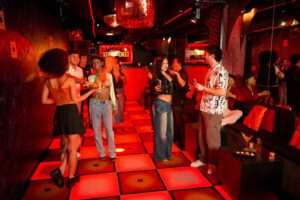
The snack brand operated a nightclub for three nights in October in New York City, and more than 2,000 consumers attended. The brand also had an invite-only influencer event to further create buzz.
The positive social media and earned media attention was a top goal for the company, as well as having consumers think and talk about the brand, said Cara Tragseiler, Senior Brand Director.
“We know our fans love Cheez-It, but it’s not always the first snack that they think of,” she said. “We’re always looking for ways to fuel conversation about the brand and keep Cheez-It top of mind. So the next time that they’re thinking about grabbing a salty snack, they think of Cheez-It first.”
Pop-Ups As Test-and-Learn Tools
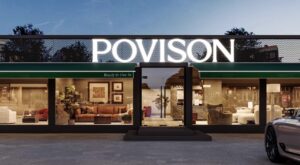
While Pandora and Cheez-It are established brands looking to make a splash, furniture brand Povison operated a four-day pop-up shop in November 2025 in Los Angeles to test how consumers would react to its product in person, said Shirley Han, General Director at Povison.
In just that few-day period, the pop-up store confirmed for Povison that physical retail should be a part of its commercial strategy. What’s more, the pop-up informed Povison’s merchandising strategy on what to focus on in stores.
The retailer learned that in a physical store, shoppers were more inclined to test out features of its furniture, like power reclining, which they can’t do online. That tactile experience helped contribute to more sales for power recliners, as the product accounted for 39% of sales and had a 30% higher average order value than the rest of its assortment.
“The store is far more than just a sales point,” Han said. “It’s actually connecting us physically to our consumer directly.”