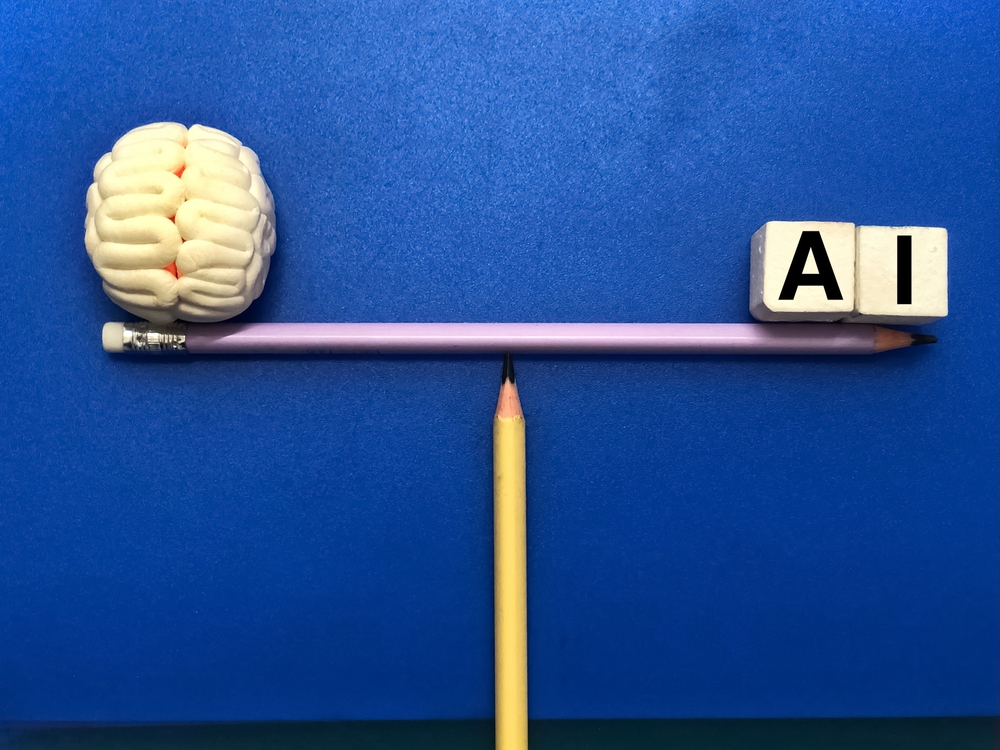
“AI is great at pattern recognition and surfacing what is common, but in brand marketing we want to break from that,” says Stephen Shultz, Vice President of Brand Marketing at First American. “It takes our creative people to figure out the right disruption to that pattern.”
That tension sits at the center of the new Marketing’s Power Partner: AI and the Human Essence report from the CMO Council. The report examines what happens when organizations stop treating AI like a productivity layer and start redesigning marketing around AI-human collaboration.
The findings expose a sharp divide. Organizations that actively redesign workflows for stronger AI-human collaboration are dramatically outperforming peers still operating in fragmented, disconnected environments. Nearly three-quarters of those organizations report measurable or above-expectation ROI from AI, compared to just 22% of those with little or no meaningful integration.
Based on insights from 371 global marketing leaders and executive interviews with brands including First American, DBS Bank, Orange Business and Gap Inc., the report makes one thing clear: AI is accelerating marketing performance, but human marketers still define what makes brands resonate.
Here’s an excerpt from the report featuring Shultz:
Far too many marketers view AI as a threat, but Stephen Shultz, vice president of brand marketing at First American, encourages his team to adopt a different mindset. Think of AI, he says, as a digital partner that helps process ideas, explore possibilities, and take on the deep research and “homework” marketers rarely have time to do on their own.
First American, a 136-year-old financial institution, is integrating AI throughout the enterprise for customer-facing services and internal productivity solutions. Under the direction of First American’s CMO, the marketing teams are adopting new tools and processes to amplify their impact. That work includes training AI tools on the company’s brand, market perspective and customer research data. Insights are then shared across teams to inform strategy and execution.
The goal is not to replace people, but to give them better information and insights that make their work stronger and more efficient.
“We’ve always been a people-first company, and AI fits naturally into that,” Shultz adds. “It supports the people doing the thinking, creating and serving so they can perform at their best.”
The marketing team can leverage AI and synthetic customer personas to test market assumptions, track how competitors are positioning themselves and refine ideas before they reach real customers. The technology helps identify opportunities, but it is still human intuition that turns those insights into something original and meaningful.
“AI can tell us what’s typical,” Shultz says. “Human creativity tells us what’s possible. The difference between those two defines great marketing.”
Within marketing, Shultz and his team are building AI-powered assistants to help marketers plan, train and measure more efficiently. The tools fill gaps in areas like research, data analysis or performance modeling to enable a small team to produce a higher volume of high-quality work.
“For lean teams, it’s a huge advantage,” he says. “AI helps us scale what we can deliver without sacrificing the quality of the thinking or the creativity behind it.”
For Shultz, human creativity is more than a soft skill. It’s the competitive moat grounded in research, insight and understanding of the customer and market. “AI is great at pattern recognition and surfacing what is common, but in brand marketing we want to break from that,” he says. “It takes our creative people to figure out the right disruption to that pattern.”
AI also helps senior marketers bridge conversations with the business side. “In the same way we create customer personas, you can ask AI to act as a skeptical CFO and help identify the financial metrics that best demonstrate impact for a particular campaign,” Shultz explains. “It helps connect marketing outcomes to business results and enables everybody to scale up their capabilities.”
He says marketers should view AI not as a threat but as a new way of working with technology that empowers them to create even more business value. In his view, AI is a catalyst for better marketing, not just faster marketing. It expands the scope of research, accelerates iteration and improves decision-making. But its real value shows up when human creativity takes those insights and transforms them into something distinct.
“Without human creativity,” Shultz says, “you’re just accelerating toward the average.”
Download Marketing’s Power Partner: AI and the Human Essence, and views the infographic on the report here.
Tom Kaneshige is the Chief Content Officer at the CMO Council. He’s a former senior analyst at Forrester Research and journalist at Informa, IDG and TechTarget.
Editor’s Note: This article is part of a monthly content series between Chief Marketer and The CMO Council, a global affinity network of more than 16,000 senior marketing executives in 10,000 companies controlling nearly $1 trillion in annual, aggregated marketing spend.