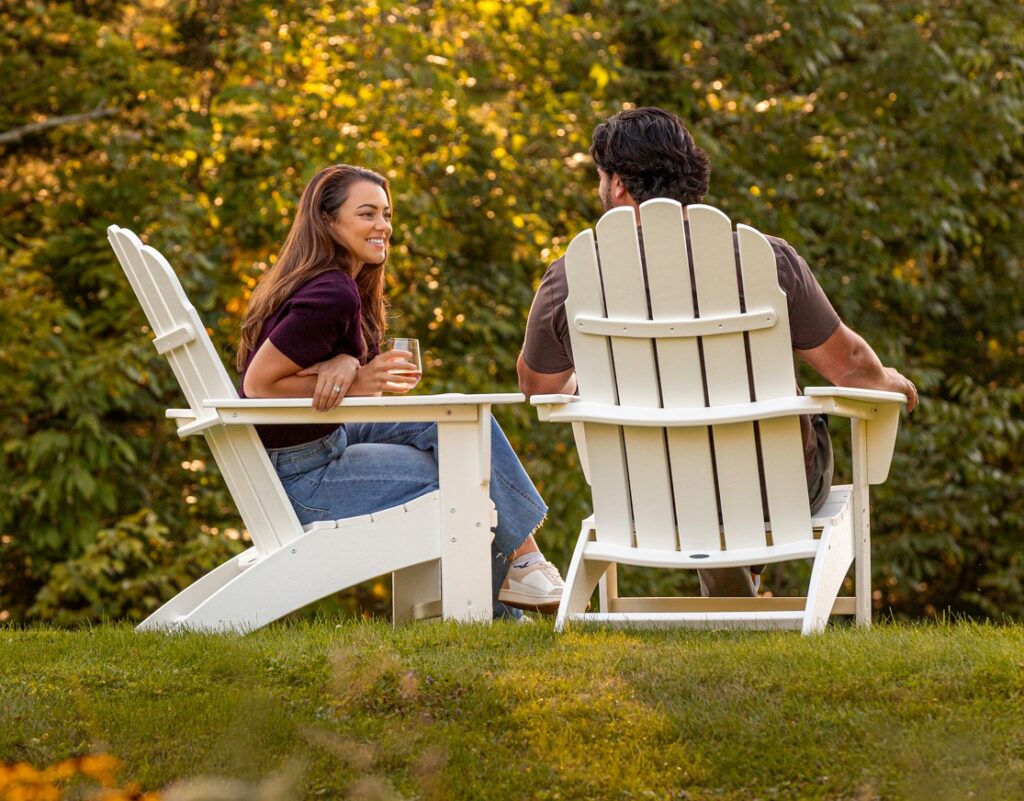
Chief Digital Officer Ben Spiegel wants shoppers to know Polywood is more than just a place to buy a great chair. He wants the outdoor furniture brand to stand for a lifestyle of living well outside.
Spiegel joined Polywood in March 2026, attracted to both the brand and the idea of building the outdoor living category. Previously, Spiegel was Global Chief Digital Officer at P&G Beauty, CEO of marketing agency MMI Agency and Managing Partner and VP of Innovation at agency WPP.
His vision is to inspire consumers to build a life outside (and furnish it with Polywood) rather than lead with product-focused marketing.
Spiegel roughly doubled the in-house creative team, invested in the company’s technology stack and got the pieces in place for the company to market itself with more targeting and personalization.
In less than two years, sales are growing, engagement with its content has increased, web traffic has increased 50% year over year and repeat purchases have increased to 1.8 from 1.5 since 2024. The below Q&A shares more about Spiegel’s journey and the tactics he is using to grow Polywood.
Chief Marketer: When you started working at Polywood on the marketing tech stack and capabilities, what did you focus on?
Spiegel: Optimizing direct response. Basically, everybody that wanted to buy outdoor furniture, making sure that we have the best ad copy, the best checkout experience, the best landing pages. Working with our retail partners to make sure when somebody walks in, they guide them to our product. Making sure that when somebody looked at features and specs and trying to use tools to design their outdoor spaces, we were top of mind.
So optimizing the bottom of the funnel and making sure that people who wanted to buy outdoor furniture found us. People that already owned the brand, making sure it was easy enough to come back to us and enhance with more pieces, upgrades and so on.
Chief Marketer: What didn’t the brand have that you changed?
Spiegel: From a tech marketing perspective, it was very segmented. We are mostly D2C. The majority of our business is in e-commerce, which is interesting for a massive durable goods brand, but we didn’t have capabilities to retarget people that had our existing furniture already, or easy ways to interact with customers on, ‘Hey, the piece is broken’ or ‘I want to buy another chair for my dining set’ or ‘I want to extend my space.’
It was very much a product company vs. a brand company. It was a great product. I love the product, but it wasn’t a brand of outdoor living. It was, you want a chair, we have the best chair possible, but that was it. We didn’t build relationships with our consumers; we didn’t inspire, educate them on what to do with the space. We just gave them really good chairs to sit on.
Chief Marketer: There wasn’t an email club or anything like that?
Spiegel: There was a sales-driven newsletter for it you wanted a new chair, but it wasn’t looked at as a lifestyle brand or as a lifestyle. We didn’t provide any aid or guidance there.
Chief Marketer: Can you talk about some of new specific features that you added to do that?
Spiegel: The first thing we did is, we have a ton of loyal customers that comment and write extremely long ratings and reviews — and not just the negative ones — but what they like and what they would like to do next. The first thing we did is used our customer feedback as our product design engine.
Instead of somebody sitting in a room and designing pieces in the silo, it’s now driven by what our consumers are saying. The pictures they’re sharing with us, the feedback we’re getting on ratings and reviews, retail review sites, customer emails. We started to ingest all of that, the years of history, that we have and then started building our design and product pipeline based on that.
Chief Marketer: What is something you learned?
Spiegel: For example, one specific area, we learned that people don’t want to bring the furniture indoors when it’s winter time. They want to have something that looks beautiful, but they can leave outdoors when it’s snowing, when it’s raining. So we started working on different finishes and educating people more on the ease of it, how easily you can just wipe it down. You don’t have to refinish it like you have to do certain wood products.
That was one big change, taking everything our consumers are saying and actually applying it to the next design iterations, to the new finishes, to the new collections.
Chief Marketer: That’s great. What about any new marketing implementations?
Spiegel: Given that we were such a digital D2C brand first, we were more focused on the metrics in these channels: how many page views do we have? And how many clicks do we have on this, or how many video views over here? Versus looking at the entire customer journey from the moment of, ‘I think I’m going to buy a new house, I want to have a backyard.’
One of the things we do is we very specifically target people who are buying new homes early on to educate them what type of backyard do you want, to inspire them to invest in those spaces.
Chief Marketer: How do you find people that are looking to buy a new house? How do you target them and then what are the types of things you do to inspire them?
Spiegel: They’re very tactical. You can buy address lists for new home owners. If you ever bought a new home, you get a catalog for roofing and pest control. We’re sending customized catalogs to home addresses.
We looked at our past data and we understood what’s the window, when does somebody buy new furniture after they’re buying new house and the different house types. Interestingly, if you have a pool, you buy new furniture within the first month. If you don’t have a pool, sometimes it’s three months. We started segmenting based on MLS data, started segmenting this type of house usually you buy furniture in this window and then you send them a custom catalog that fits their geographic area. If you’re living near the beach, it’s beach created; if you’re living in New England area, it’s more mountain and Martha’s Vineyard type of imagery; if you’re living in New Mexico area, it’s more desert outdoors.
Chief Marketer: Does Polywood have an in-house creative team?
Spiegel: That’s one of the biggest things we invested in over the last year. We hired some great creative directors that I’m proud of being able to attract over the last year and brought a lot of visualization experts in. As you think about the world of photo shoots and now with AI, what can we do visually to personalize? We went from an external, more agency model to a more in- house team.
Chief Marketer: What are the advantages of having an in-house team?
Spiegel: I’m coming from the agency world. I used to run an agency, so I love agencies. Generally, when you have an agency, one of the benefits is they have a lot of broad experience on working on similar clients. In our world, it doesn’t really exist. They might have worked on some durable goods brands, but they’re not a lot of out of furniture brands, and the benefit of the agency is bringing in external learning in the category.
We have large furniture. We have an incredible manufacturing process. Having teams on site that can interact with the pieces, that can work with our design team to tell stories, to create spaces that we then choose and publish, has been different vs. having somebody somewhere remotely or at an agency.
It’s living the brand. The idea of understanding it and living the outdoor lifestyle. It’s something we need to have in order to communicate it effectively.
Chief Marketer: The drawback though is that it’s expensive. Is that correct?
Spiegel: It is more expensive, I would say, but the output we have seen from the in-house work is much better than the external from a sense of understanding the brand, understanding the consumers and we have been able to move much faster.
Chief Marketer: Do you have an example?
Spiegel: Our business is driven by the weather. If it’s raining outside for a week in the state, we’re not getting any orders in that state. Nobody’s buying outdoor furniture when the backyard is drenched.
The level of fragmentation we have between different landscapes, different home types, it just becomes very ineffective to do externally if you want to do the same level of granularity. I’m coming from a CPG world where I have 12 different deodorants. It’s very easy to do. We have 15,000 very different skews and different colors and finishes that is a lounge chair vs. a family dining room table vs. a rocker.
A lot more creative diversity is needed to tell that story. We are in 20-plus different retailers, which means different packaging, different customers there. We needed to have it in-house to have that level of customization.
Chief Marketer: How big is your team now?
Spiegel: Standard creatives, around 25. I have about 25 people also on the marketing and advertising side that work on that. We have a couple of agency partners for some of the retail media and media value, but everything else is in-house. Then we have a couple of marketing technologists that we are working on the integration of the capabilities.
Chief Marketer: How many people did you hire?
Spiegel: I probably brought in 20 new people.
Chief Marketer: Can you talk a little bit about some of the results you’ve seen from this change and then some of the other changes?
Spiegel: This year we had in May our biggest month ever, in terms of sales. It was just a fantastic start of the year with good creative. Where again, we used to have a lot of product imagery versus we now switched our content to the lifestyle and storytelling. I know it sounds cheesy, but it’s such a difference to go from seeing a picture of an item vs. an experience.
Overall engagement with content has gone up. Business results are, we are up year over year dramatically in a tough economy, which we’re proud of.
The biggest thing I would say also is our engagement with repeat customers has gone up dramatically to a higher repurchase rate.
Chief Marketer: That’s great. What is your repeat purchase right now?
Spiegel: Right now, this year it’s running 1.8. So 1.8 purchases for consumers and now our average order value is around $1,800.
Chief Marketer: What was it prior to some of these changes?
Spiegel: It was somewhere $1,550 before that and the purchase rate was at 1.5. But it’s a rolling one and we haven’t seen the impact of the new consumers we have brought in. It’s about two to three years between purchases so that we expect that to be continuous growing month over month versus the flat base from before.
Chief Marketer: Your best sales month in May, is there something specific you attribute that to or is that the culmination of everything in the start of the spring season?
Spiegel: We had an interesting start in terms of timing this year and what I contribute is to good targeting based on weather trends. We did a model where we take a seven-day rolling window on a ZIP code — weather station level — to look at, what was the weather last year, seven days before somebody made the purchase, we looked at what’s the exact window. So three days of increasing temperature by X percent is when somebody did an order and then we used it this year to do our targeting on a local level based on that.
You can waste a lot of money targeting somebody when it’s raining; they’re not going to buy furniture. But with all the data that’s out there freely available — the weather data is free historic. We loaded that in, used a lot of machine learning to look at last year as our customer bought and then we used that to target and it worked out well.
Chief Marketer: And then you’re targeting them on social or direct mail or something else?
Spiegel: Social search and catalog are probably our biggest ones. Social, you can do DMA-based targeting, you can do zones and search and then catalog is obviously address based.
The other thing we also did is we acquired a lot of address level data. For each address, what’s the square footage outside? Do they have a pool? We use permit data so when people file for pool permits and patio permits to send out catalogs. So trying to target outside of the normal black box of Facebook.
This article has been edited for length and clarity.